
Gas and liquid
Gravity, impingement or cyclone separators and mist eliminators to remove droplets from a gas or vapour stream.
Separating phases is part of almost every process: gas from liquid, one liquid from another, solids from liquids. We design and integrate those stages so the process performs and the downstream equipment stays protected.
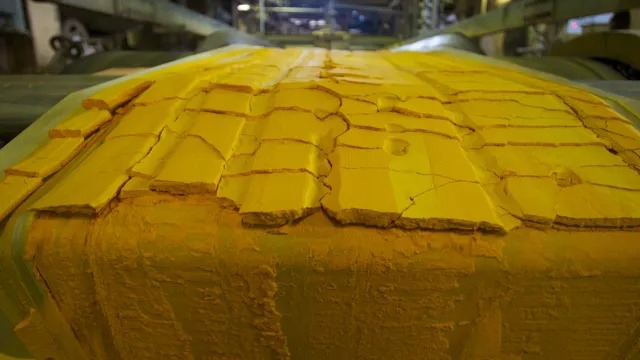
Separation is one of the basic unit operations of physicochemical processes. It is found in mining, chemicals, oil and gas, food and water treatment, and also inside many machines, such as compressors and refrigeration plants. Product purity, process yield and equipment protection all depend on it.
When a separation fails, it shows up further down the line: liquid reaching a compressor, oil fouling a heat exchanger, solids clogging surfaces or product lost with an effluent.
The method depends on what is separated and under which conditions: differences in density, particle size, solubility or temperature. We start from the properties of each stream to choose the technology and size each stage.
Types of separation
Each combination of phases has its own technologies.
Gravity, impingement or cyclone separators and mist eliminators to remove droplets from a gas or vapour stream.
Separation of immiscible liquids, such as oil and water or oil and refrigerant, by density difference and coalescence.
Settling, filtration and centrifugation to recover a solid or clarify a liquid.
Cool or concentrate a solution so the product separates as a solid. It is the basis of the potash process we are developing for Argentina Potash.
MiningReverse osmosis retains dissolved salts and contaminants to produce low-conductivity water for processes, boilers and circuits.
Water treatmentFRISEP drift eliminators retain the water carried by the air of cooling towers and evaporative condensers, with very low pressure drop.
Fills and drift eliminatorsIn our equipment
Some separation stages sit inside the equipment and systems we design every day.
Our compressor units with GEA compressors separate oil to below 3 ppm, with about 60 litres of oil in an 800 HP unit.
Compressor unitsSeparator vessels protect the compressors from liquid carry-over and feed the evaporators of the refrigeration plant.
Ammonia refrigeration plantsLineVu, by Process Vision, uses cameras to watch high-pressure natural gas after the separators and detects glycol or oil carry-over.
Oil & GasHow we work
Flow rates, composition, densities, viscosity, particle size and temperatures.
What purity or maximum carry-over the next stage of the process can accept.
Technology, size, materials and instrumentation of each stage.
Levels, purges, alarms and washes integrated into the plant control.
With the characteristics of the streams and the separation target we can propose how to solve it.