
Practical guide
From concept to project: what to define before bidding
Selecting an industrial refrigeration system is a major decision. An inadequate choice directly affects process efficiency, energy consumption, and final product quality. Yet there is no universal solution: every industry, process, and environment has distinct requirements.
In this guide, we share the primary factors you should consider to make an informed decision.
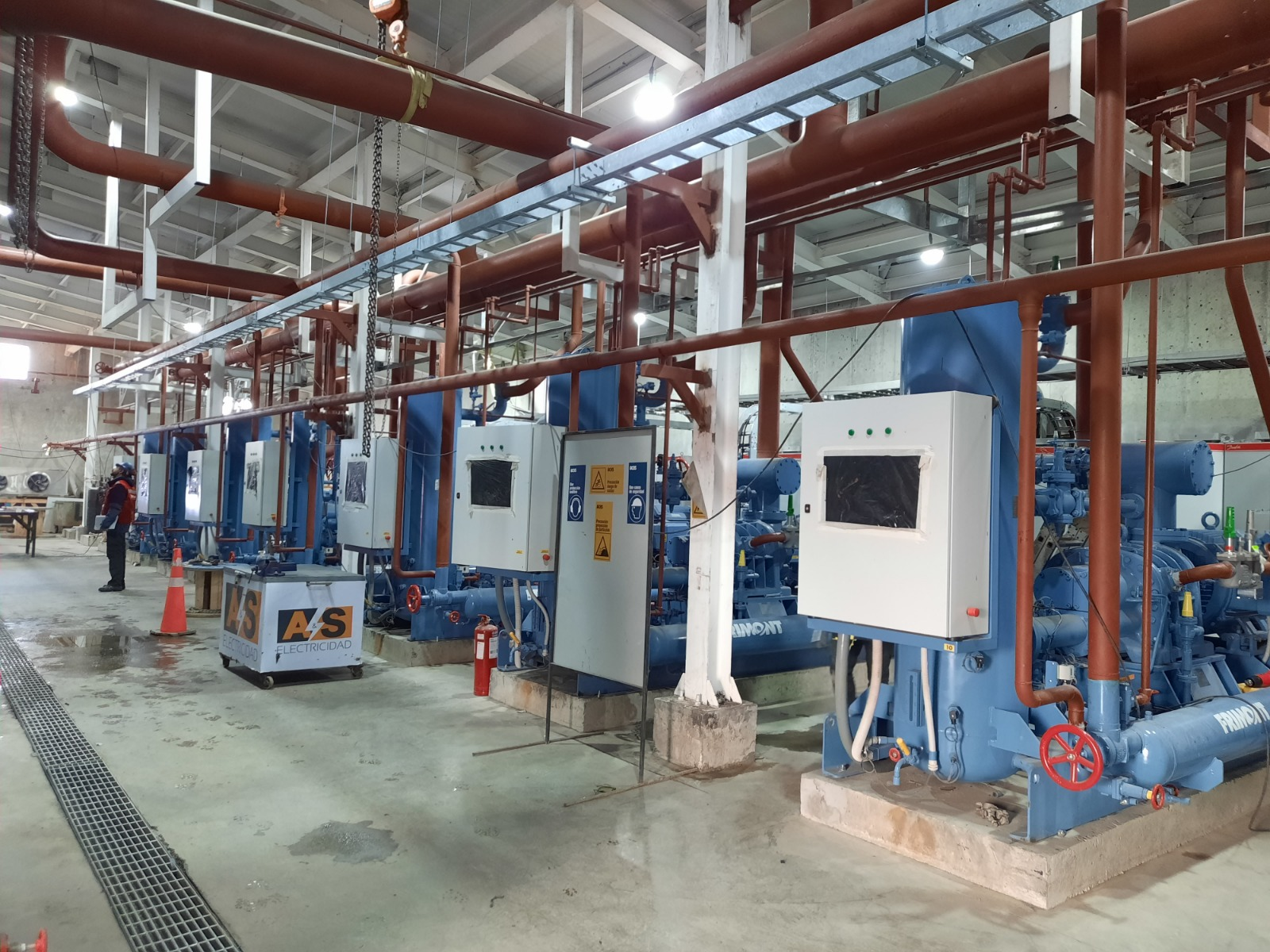
Process or industry type
Cooling a liquid in a chemical plant is fundamentally different from storing fruit in a cold storage warehouse. Each industry has distinct thermal demands, operating conditions, and regulatory compliance standards.
Required thermal capacity
Knowing the exact heat load the system must remove, expressed in kilocalories or kW, is essential. This defines the sizing and type of equipment required.
Ambient conditions
Ambient temperature, relative humidity, altitude, and airborne contaminants at the installation site can directly impact system performance. They also dictate condenser selection.
Energy availability and utility sources
Evaluating available utility sources (electrical, gas, solar, etc.) and grid reliability is key. In many installations, energy efficiency becomes the deciding factor.
Available space and clearance
Physical footprint and access pathways to the installation area constrain layout design and system configuration. Compact or modular skids are often preferred for restricted footprints.
Energy efficiency
An energy-efficient system delivers substantial long-term savings, especially in processes operating 24/7. Key performance indicators used to evaluate efficiency include:
- EER (Energy Efficiency Ratio)
- SEER (Seasonal EER)
- IEER (Integrated EER)
- COP (Coefficient of Performance)
- TEWI (Total Equivalent Warming Impact)
Maintenance and spare parts availability
The layout must facilitate preventive maintenance and rely on readily accessible components in the regional market. Access to qualified service technicians is equally critical.
Safety and regulatory compliance
In food, pharmaceutical, and energy sectors, regulatory compliance is mandatory. Leak risks, refrigerant classifications, and environmental mandates (such as natural refrigerants like NH₃ or CO₂) must be evaluated early.
Budget and expected ROI
Selection goes beyond initial capital expenditure; total cost of ownership across the system lifecycle must be analyzed. Projecting returns based on energy savings, reliability, and equipment longevity is essential.
Scalability
Planning for future expansion is central to sound engineering. Systems should allow modular expansion or reconfiguration as production targets increase or operational requirements evolve.
Keep exploring
Review how engineering scope is defined and applied in an industrial project.
There is no single ideal system. There is the ideal system for your facility.
Every process follows its own operational logic and thermal demands. Informed engineering decisions lead to reliable long-term performance.
Need guidance finding the right solution for your plant?
Our engineering team can assist you in evaluating and sizing the system best matched to your actual operating conditions.
Tell us about your project