Storage zones
Definition of circuits and equipment for cold rooms with different temperature regimes and cargo types.

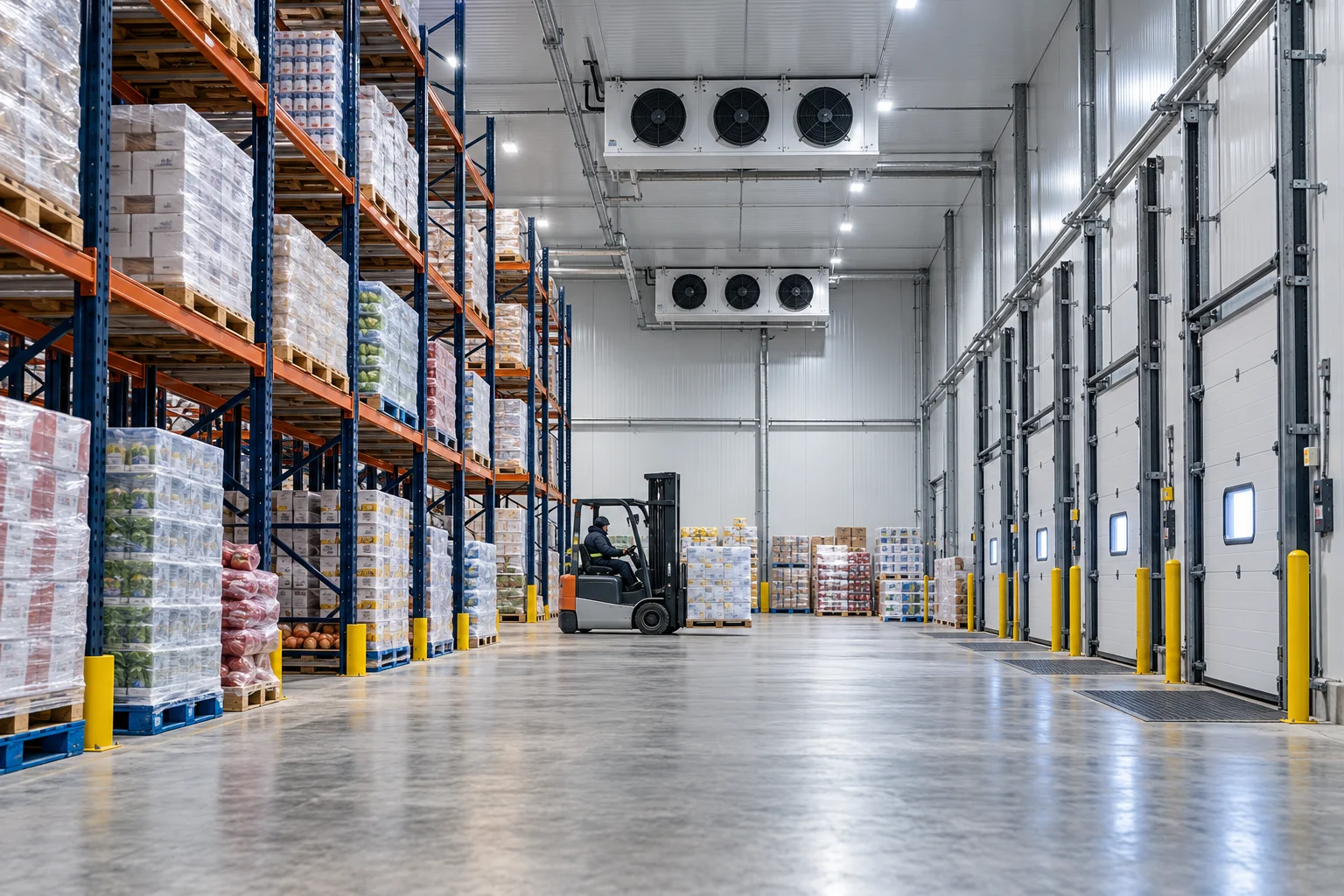
Continuous thermal control maintains the cold chain, protects inventory, and streamlines logistics operations.
Tell us about your projectIllustrative image
In a logistics center, cooling demand fluctuates with inventory turnover, incoming shipments, and door openings. The design must consider both product requirements and the dynamic realities of storage and dispatch.
Definition of circuits and equipment for cold rooms with different temperature regimes and cargo types.
Evaluation of loads associated with product movements, ante-rooms, dock doors, and operating schedules.
Supervision of key variables and planning for future expansions from the initial layout of the facility.
Before selecting equipment
Your operational conditions define the design. These are the key aspects to review from the start.
Are you planning a new cold storage warehouse or expanding an existing facility?
To get started, you can share:
You do not need a complete RFP to start a conversation.
Tell us about your projectWe can handle a single stage or integrate multiple disciplines. Frimont's scope of responsibility and deliverables are defined for each project.
Load calculations by zone and operating scenario
Engineering for cooling generation, distribution, and control
Implementation schedule and functional testing
Learn about our capabilitiesEquipment and applications
Options to evaluate based on your process conditions.
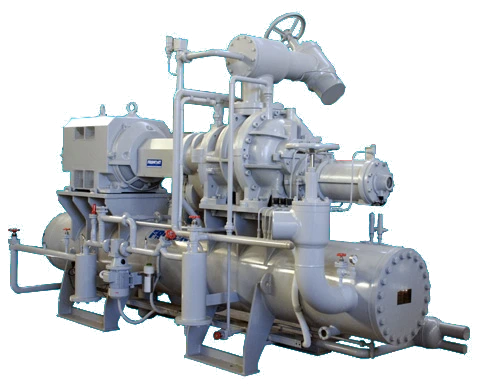
Chillers with ammonia, CO₂ or hydrocarbons: natural refrigerants with no impact on the ozone layer and zero or near-zero GWP.
Explore equipment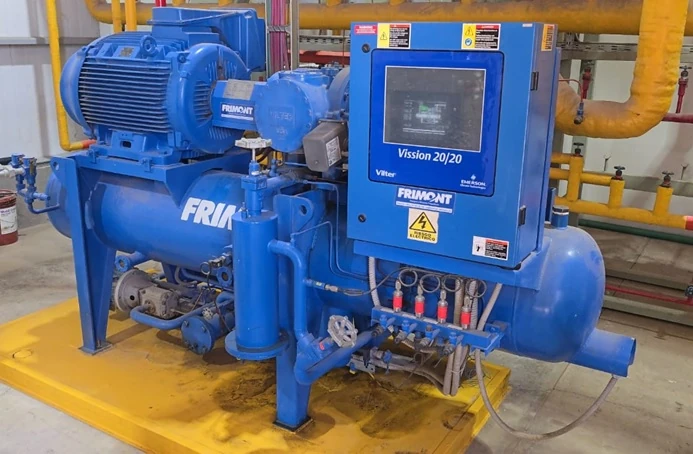
Chillers with the smallest possible refrigerant charge: cooling reaches the plant through water, glycol, aqueous solutions or pumped CO₂, from +20 °C down to −50 °C.
Explore equipmentIndustrial ammonia chillers: GWP 0, high efficiency and reduced charge.
Explore equipment