
Chillers and liquid chillers
Green chillers · Natural refrigerants
Chillers with ammonia, CO₂ or hydrocarbons: natural refrigerants with no impact on the ozone layer and zero or near-zero GWP.
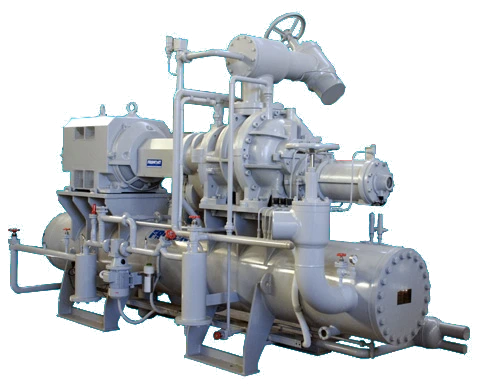
Applications
What it solves.
Natural refrigerants (ammonia, CO₂ and hydrocarbons) do not deplete the ozone layer, have zero or near-zero GWP and are not covered by the HFC phase-down. We design our green chillers with the natural refrigerant that best suits each process and with the safety criteria each one requires.
- Meat plants, food factories and logistics centers with ammonia machine rooms.
- Low-temperature processes with CO₂ or ammonia/CO₂ cascade systems.
- Companies with decarbonization targets looking for refrigerants outside the HFC phase-down.
Configurations
A configuration tailored to your application.
Technical selection defines the equipment and its integration with the process.
Ammonia · R-717
The natural refrigerant with the longest track record in industry: GWP 0 and very good efficiency. It is toxic, so we design with reduced charge, machine room, ventilation and detection.
CO₂ · R-744
GWP 1, non-flammable and lower toxicity (class A1). It runs at high pressures, so it is used mainly at low temperature, in cascade with ammonia and for heat recovery.
Hydrocarbons · R-290 and R-1270
Propane and propylene: near-zero GWP and good efficiency, but highly flammable (class A3). They are used in compact chillers with a small refrigerant charge, installed outdoors.
Standards we work to
We design, install and maintain natural refrigerant systems to internationally recognized safety standards.
Standards
- ANSI/IIAR 2: safe design of closed-circuit ammonia refrigeration systems.
- ANSI/IIAR 6: inspection, testing and maintenance.
- ANSI/IIAR 7: operating procedures.
- ANSI/IIAR 9: minimum safety requirements for existing systems.
- ANSI/IIAR CO2: safety of closed-circuit CO₂ refrigeration systems.
Technical data
Reference values.
Natural refrigerants
ASHRAE 34 safety class and 100-year global warming potential (GWP).
| Refrigerant | ASHRAE 34 class | GWP | Strength | Main precaution |
|---|---|---|---|---|
| R-717 · Ammonia | B2L | 0 | Efficiency at large capacities | Toxicity |
| R-744 · CO₂ | A1 | 1 | Non-flammable, low temperature | High working pressures |
| R-290 · Propane | A3 | 3 | Efficiency in compact units | Flammability |
| R-1270 · Propylene | A3 | 2 | Medium and low temperature | Flammability |
None of these refrigerants is covered by the Kigali Amendment HFC phase-down. 100-year GWP: U.S. EPA Technology Transitions GWP Reference Table, rounded; ammonia, 0 (the EPA assigns it 1).
Selection
How we define the solution for your process.
We start from what you need to achieve and your facility conditions. We guide you through defining requirements and selecting an appropriate configuration. You do not need to have all this data to start the conversation.
What we evaluate during technical definition
- Refrigerant and temperature
- Fluid temperature, capacity and whether the site already has an ammonia or CO₂ installation.
- Safety and location
- Refrigerant charge, machine room, ventilation, detection and distance to people and public areas.
- Operation and maintenance
- Trained staff, operating procedures and periodic inspections.
Documentation
Technical documentation.
Request technical documentation for the configuration required by your process. Tell us about your application and operating conditions to guide the inquiry.
Request technical documentationEngineering and integration
Scope is defined with you.
From equipment selection to integration, installation, and commissioning, we agree on what the project needs and how it connects to your facility. Control systems and after-sales service are integral parts of that conversation.
What we can undertakeWithin the same system
Related equipment.
Ammonia chillers · R-717
Industrial ammonia chillers: GWP 0, high efficiency and reduced charge.
Explore equipment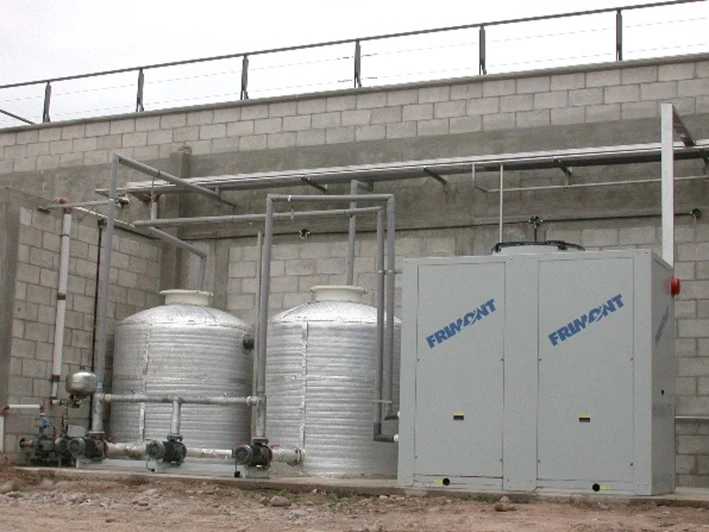
Propane chillers · R-290
Propane chillers: GWP 3, very good efficiency and outside the HFC phase-down, designed for a flammable refrigerant.
Explore equipment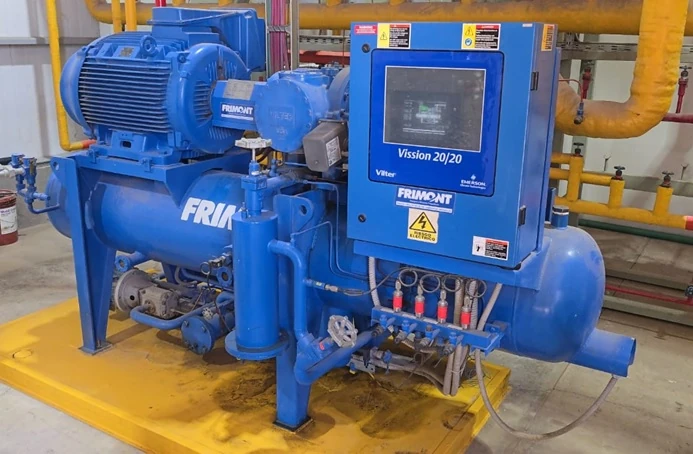
Low-charge chillers · Dry chillers
Chillers with the smallest possible refrigerant charge: cooling reaches the plant through water, glycol, aqueous solutions or pumped CO₂, from +20 °C down to −50 °C.
Explore equipment