
Refrigeration systems and product chilling
CTI fixed ammonia detectors
FRIMONT distributes CTI (Calibration Technologies, United States), a gas detection manufacturer specialized in ammonia. We build its detectors into our plants and also supply them as a stand-alone safety project. Continuous ammonia detection in machinery rooms, cold rooms, tunnels and relief lines, with sensors built for cold, condensation and washdown.
This page follows CTI's product presentation (ctigas.com), adapted to the FRIMONT site. Ranges and data are catalog figures.
Configurations
A configuration tailored to your application.
Technical selection defines the equipment and its integration with the process.
General areas
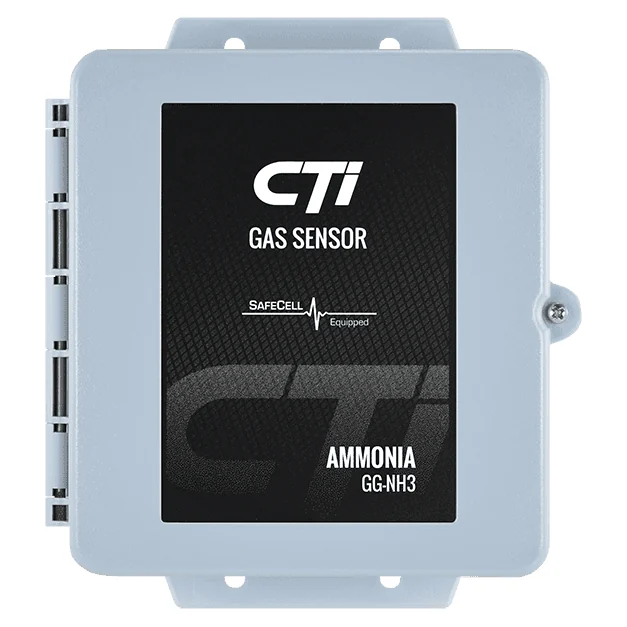
GG-NH3
CTI's general-purpose ammonia detector for machinery rooms, cold rooms and washdown areas. SAFECELL electrochemical sensor, checked every 40 seconds, or catalytic bead for high ranges.
Catalog data
- Electrochemical ranges: 0-50 to 0-1,000 ppm
- Catalytic ranges: 0-1% and 0-2%
- 4-20 mA output, 24 VDC
- NEMA 3RX polycarbonate or stainless steel enclosure
- Operates from −46 to +50 °C, with three-stage heater
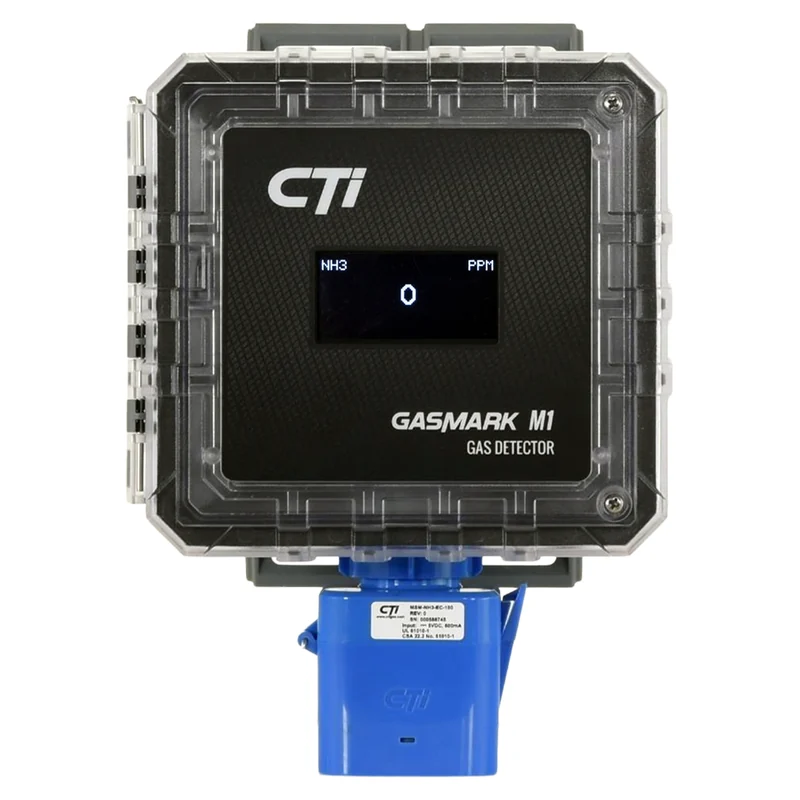
GasMark M1
The evolution of the GG-NH3: it adds Modbus communication, two optional relays, an optional display and sensor diagnostics. The sensor module is field-replaceable, and the unit replaces a GG-NH3 without new mounting holes or conduit.
Catalog data
- Ranges: 0-100 or 0-250 ppm
- 4-20 mA and Modbus RTU (RS-485) outputs
- 2 programmable SPDT relays, optional
- NEMA 3RX/4X enclosure for indoor, outdoor or washdown
- Operates from −45 to +50 °C
Classified areas and relief lines
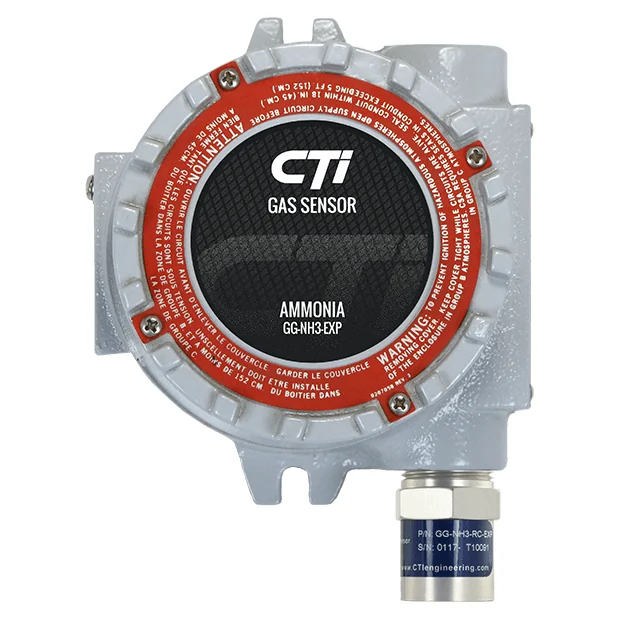
GG-EXP · Explosion-proof
For classified areas such as compressor rooms. Explosion-proof copper-free aluminum enclosure, with sensors specific to ammonia and other toxic gases.
Catalog data
- Electrochemical ranges: 0-5 ppm to 0-1%
- Class I, Div. 1 and 2, Groups B, C and D (NEC/CEC)
- ATEX component certificates for enclosure and catalytic head
- 4-20 mA output, 24 VDC
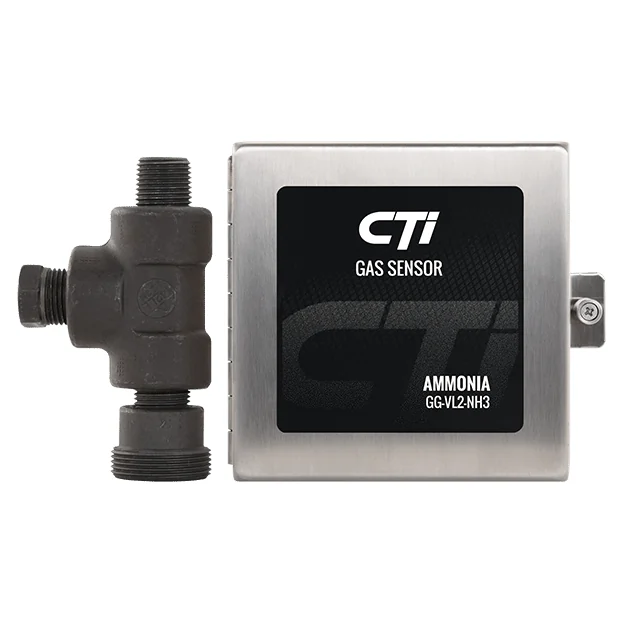
GG-VL2 · Vent line
Mounted on the relief valve discharge, 1 to 1.5 m above the roof line, it continuously checks whether a valve is leaking or the system has relieved from overpressure. Available for ammonia and for synthetic refrigerants.
Catalog data
- Range: 0-1% (10,000 ppm)
- Catalytic sensor for ammonia; solid-state for synthetics
- NEMA 4X 316 stainless steel enclosure
- Operates from −40 to +60 °C
Technical data
Reference values.
CTI ammonia detectors
| Model | Use | Range | Outputs |
|---|---|---|---|
| GG-NH3 | General and washdown areas | 0-50 ppm to 0-2% | 4-20 mA |
| GasMark M1 | General areas, with diagnostics | 0-100 or 0-250 ppm | 4-20 mA, Modbus, optional relays |
| GG-EXP | Classified areas | 0-5 ppm to 0-2% | 4-20 mA |
| GG-VL2 | Relief valves and vent lines | 0-1% | 4-20 mA |
Source: CTI (ctigas.com). 2-year warranty on sensor and transmitter. 3-conductor shielded cable up to about 450 m.
Applications
What it solves.
CTI builds ammonia detectors for industrial refrigeration in Columbia, Missouri: units that work in sub-zero rooms, in high-pressure washdown areas and outdoors, with a built-in heater and a circuit board potted against corrosion. At FRIMONT we define with the plant where each detector goes, its range and alarm levels, and connect them to the detection panel or to the FCX control so that an alarm triggers the ventilation and shutdowns the project requires.
- Ammonia machinery rooms.
- Cold rooms, freezing tunnels and anterooms.
- Relief valves and vent lines.
- Compressor rooms classified as hazardous areas.
Selection
How we define the solution for your process.
We start from what you need to achieve and your facility conditions. We guide you through defining requirements and selecting an appropriate configuration. You do not need to have all this data to start the conversation.
What we evaluate during technical definition
- Location and number of detectors
- Ammonia is lighter than air, but when cold or as a liquid mist it can stay low. We set the locations according to the room, its ventilation and the points where leaks can occur: compressors, valves, pumps and evaporators.
- Ranges and alarm levels
- A low range detects small leaks and protects people; a high range serves emergency ventilation and shutdowns. Levels are set according to the standards that apply to the project, such as ANSI/IIAR 2 for ammonia systems.
- Integration with the control
- Detectors connect to a CTI detection panel or to the plant's FCX control, which drives ventilation, audible and visual alarms and the planned shutdowns.
Documentation
Technical documentation.
Request technical documentation for the configuration required by your process. Tell us about your application and operating conditions to guide the inquiry.
Request technical documentationEngineering and integration
Scope is defined with you.
From equipment selection to integration, installation, and commissioning, we agree on what the project needs and how it connects to your facility. Control systems and after-sales service are integral parts of that conversation.
What we can undertakeWithin the same system
Related equipment.
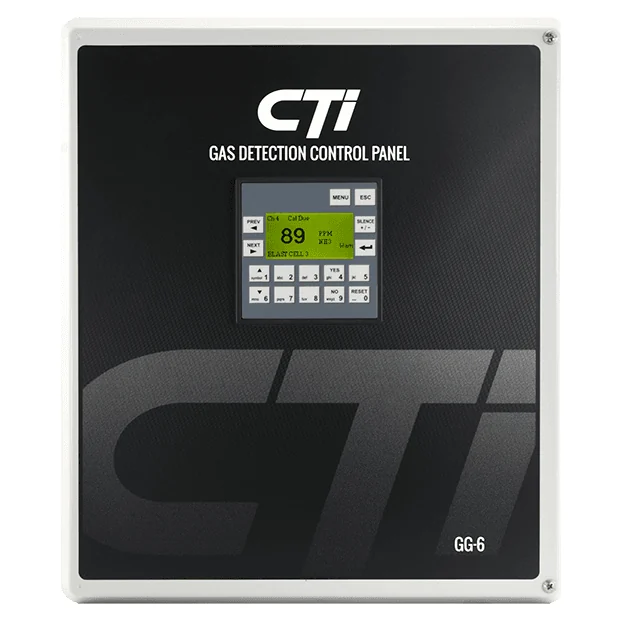
CTI gas detection controllers
Panels that receive the detector signals, show concentrations, log events and drive alarms, ventilation and shutdowns.
Explore equipment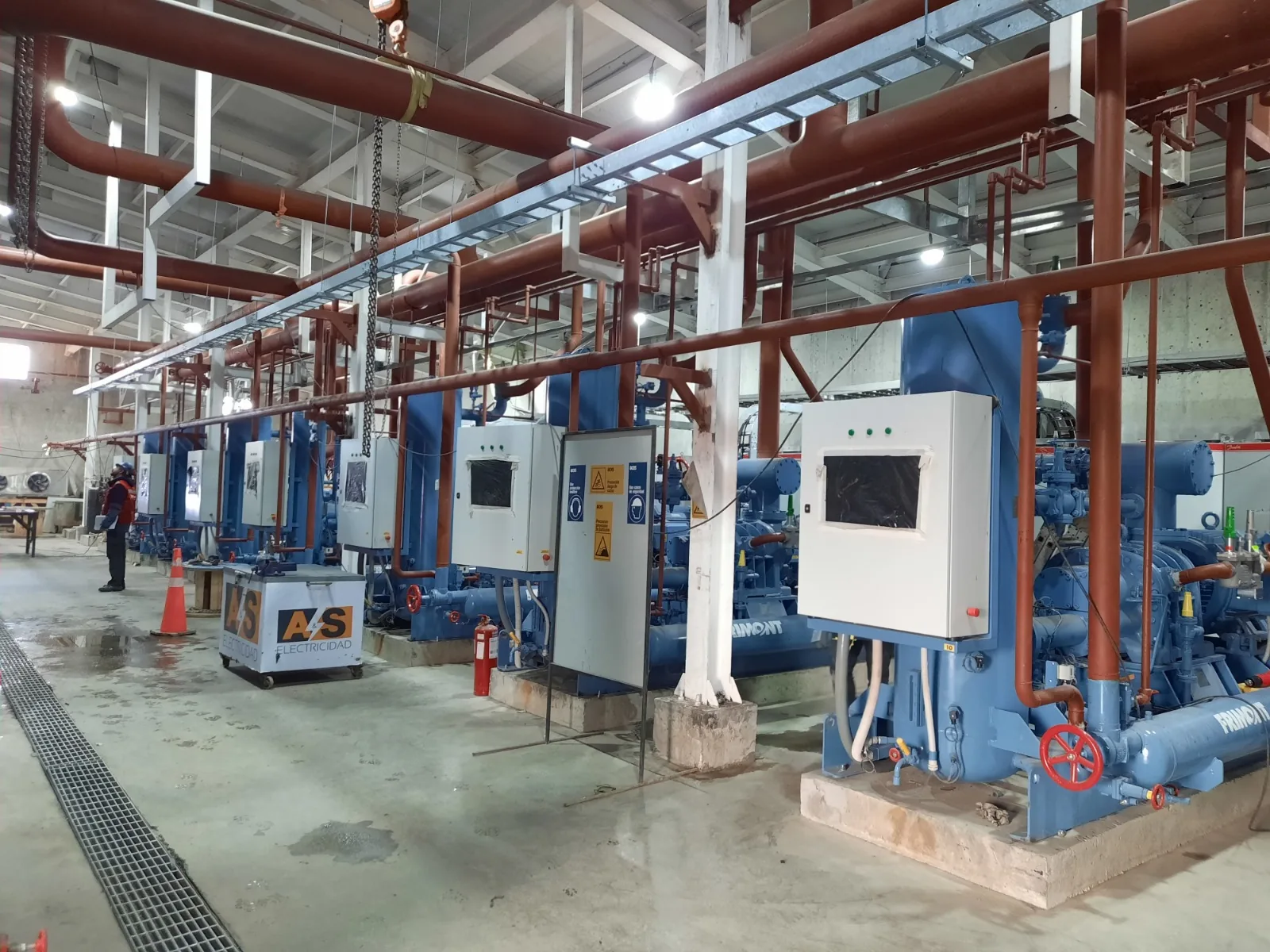
Ammonia refrigeration plants
Refrigeration engineering and integration for industrial cold rooms and processes.
Explore equipment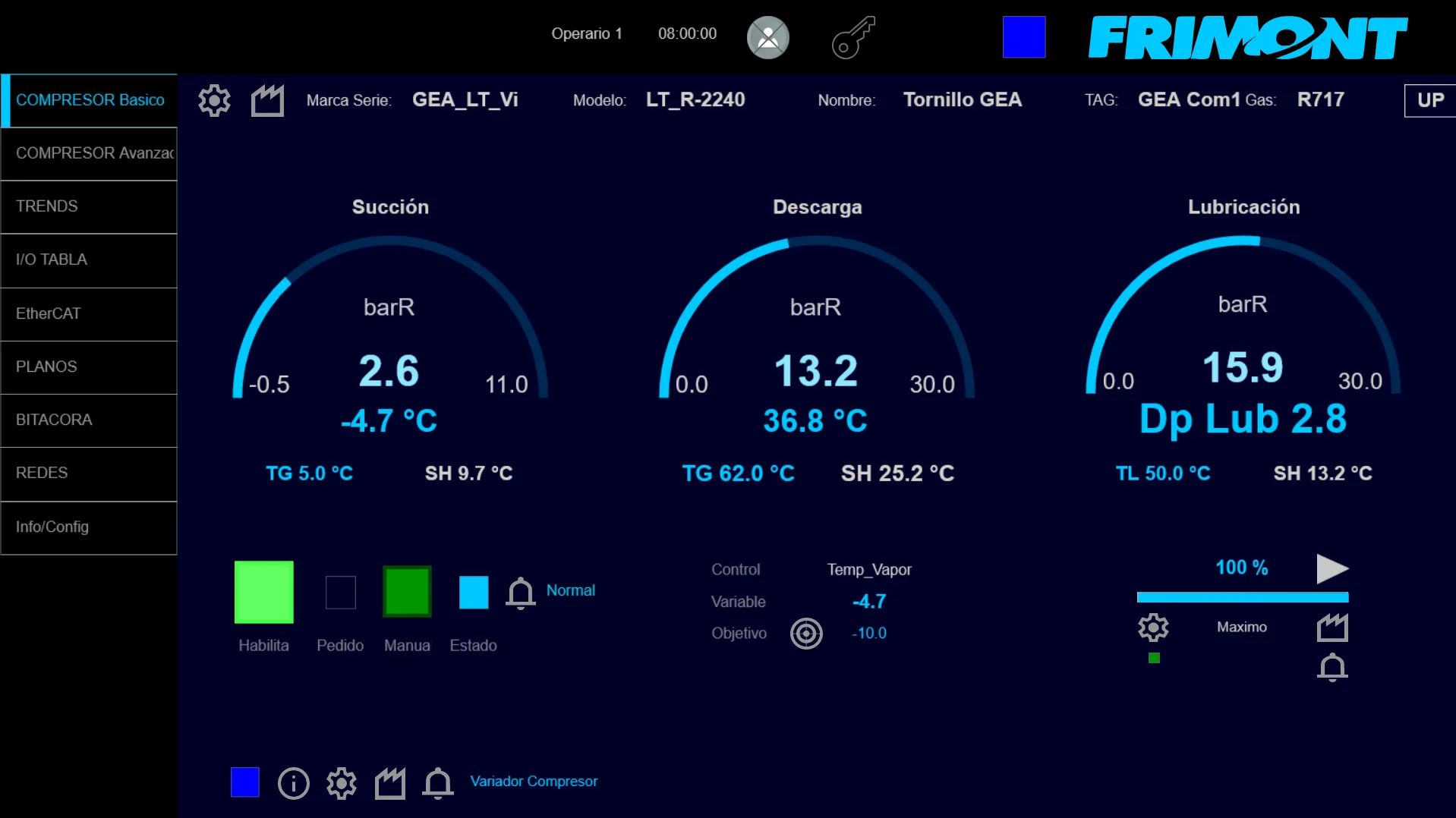
FCX · Process control and supervision
Industrial process control programmed in CODESYS to IEC 61131-3, with integrated HMI and SCADA.
Explore equipment