FCX Control and automation
FCX · Process control and supervision
Industrial process control programmed in CODESYS to IEC 61131-3, with integrated HMI and SCADA.
Designed by process engineers: control is part of the solution, not a final patch. More than 20 large machines and projects with FCX in 4 years.
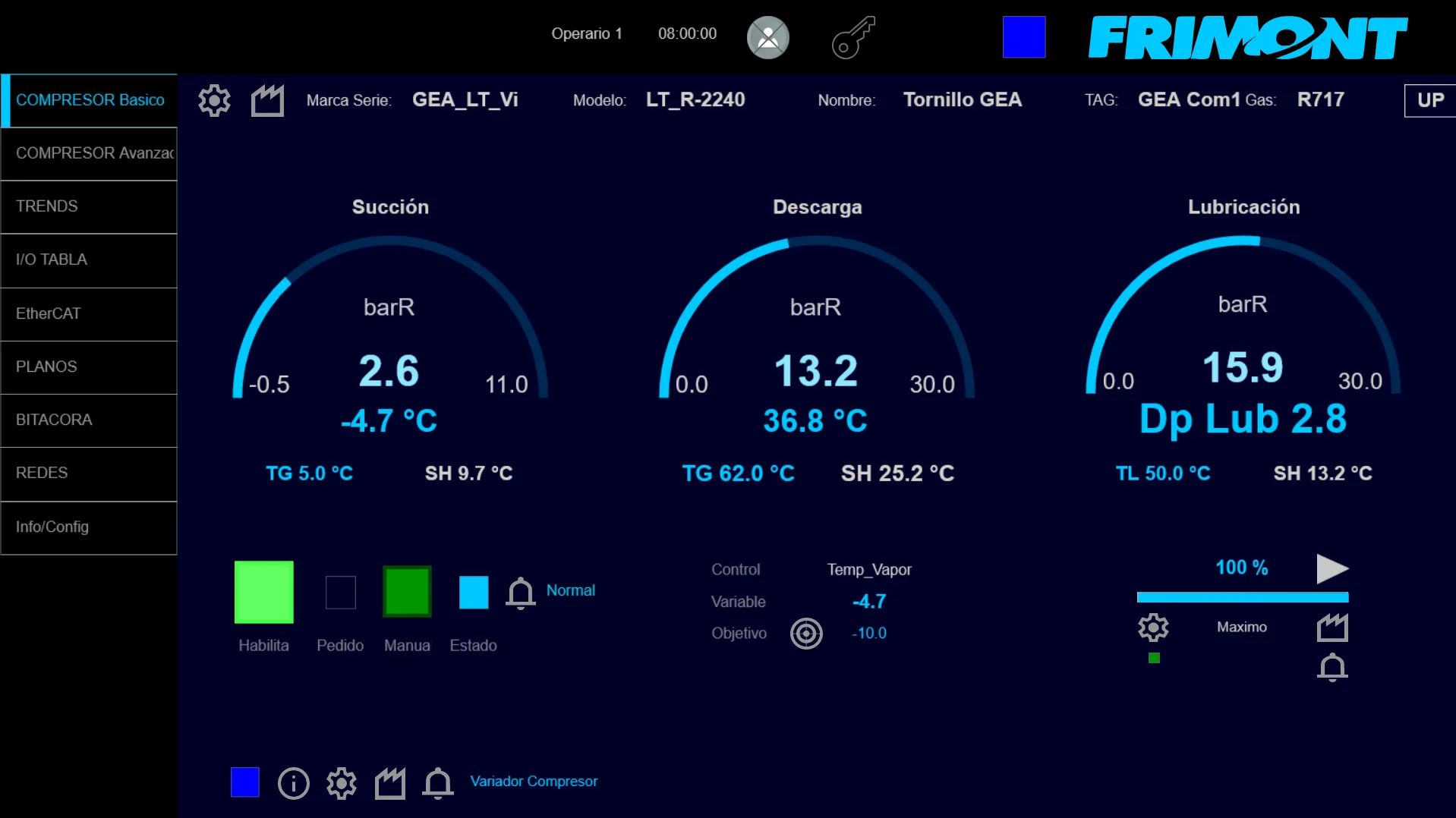
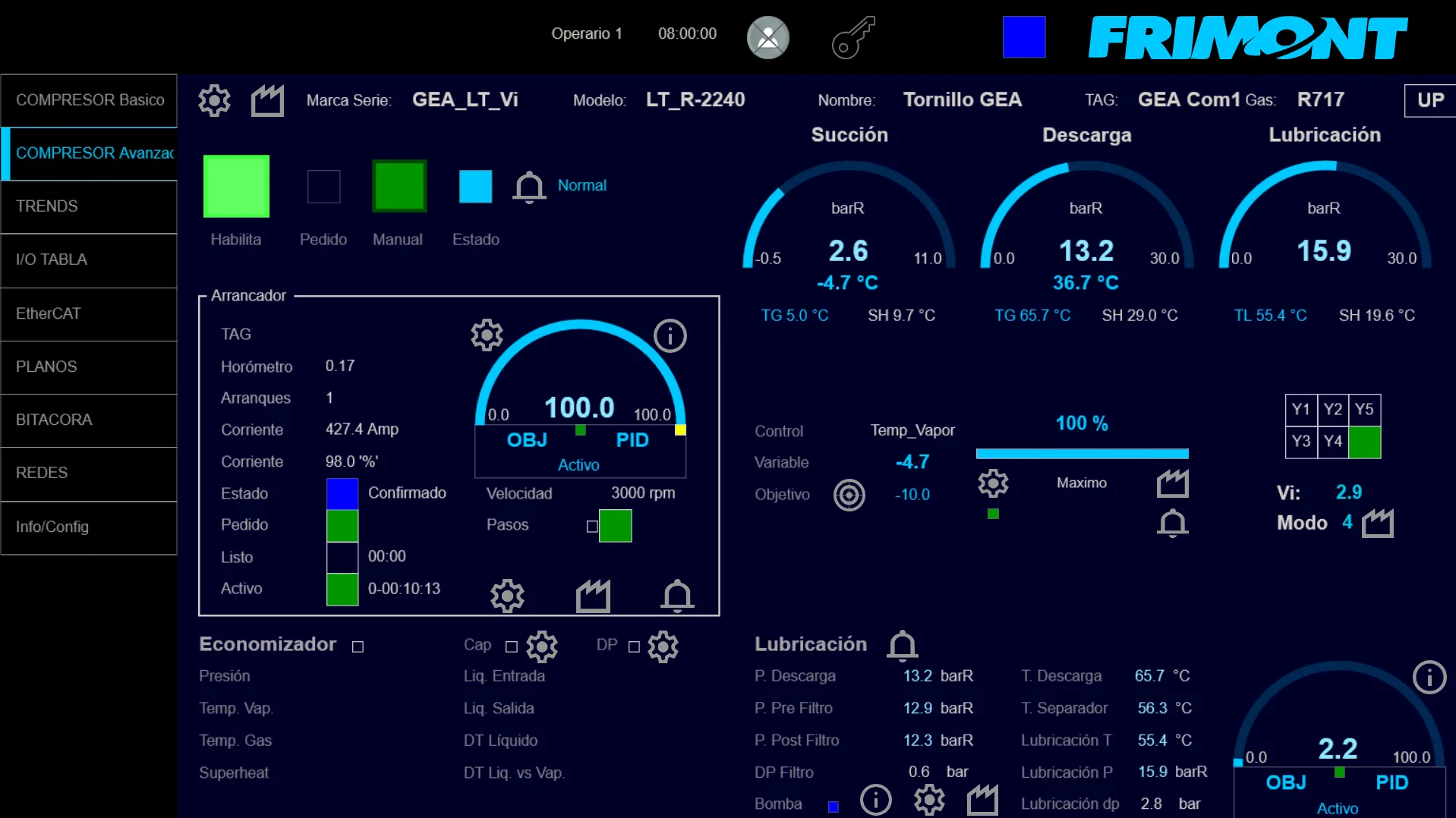
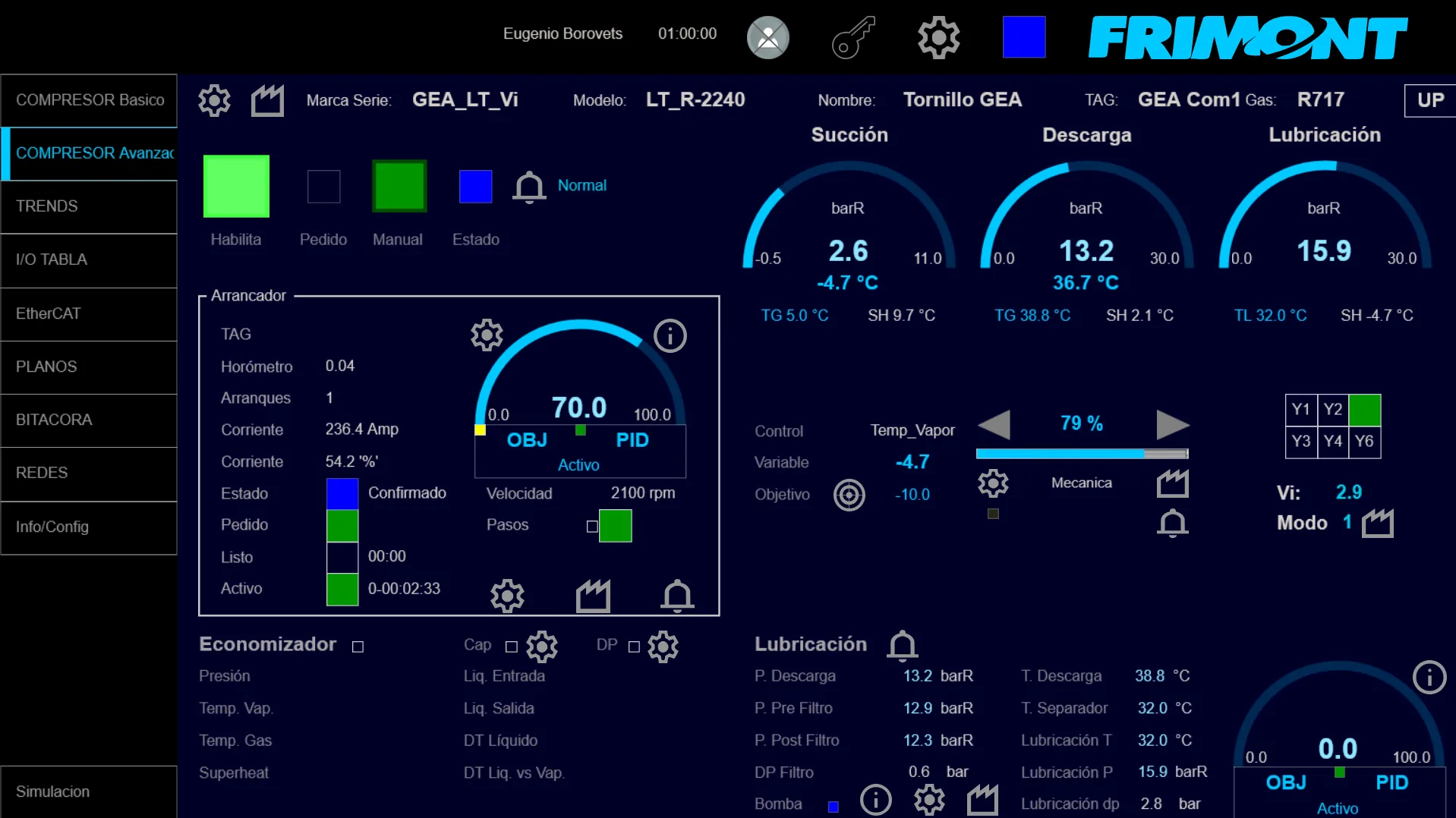
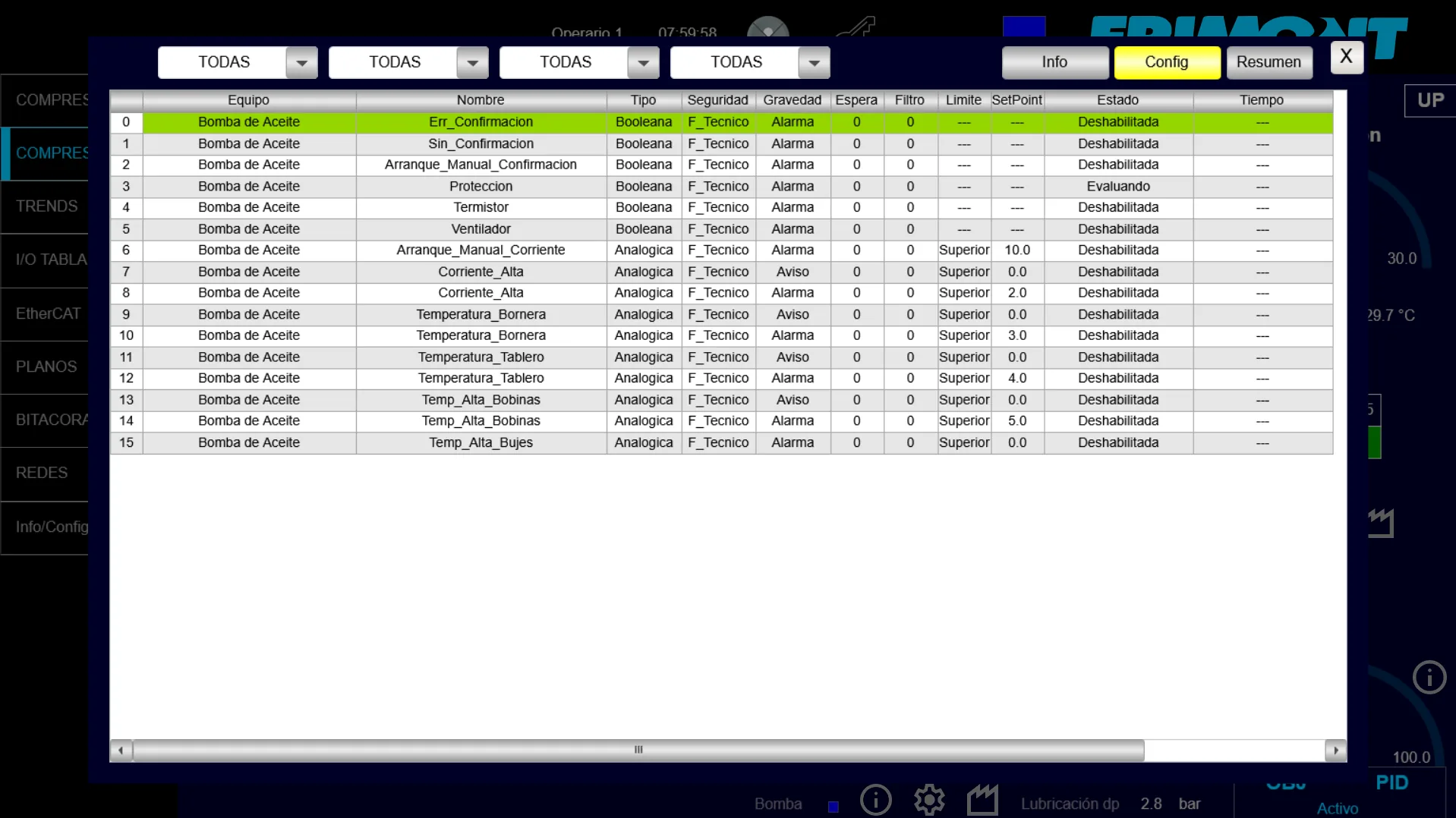
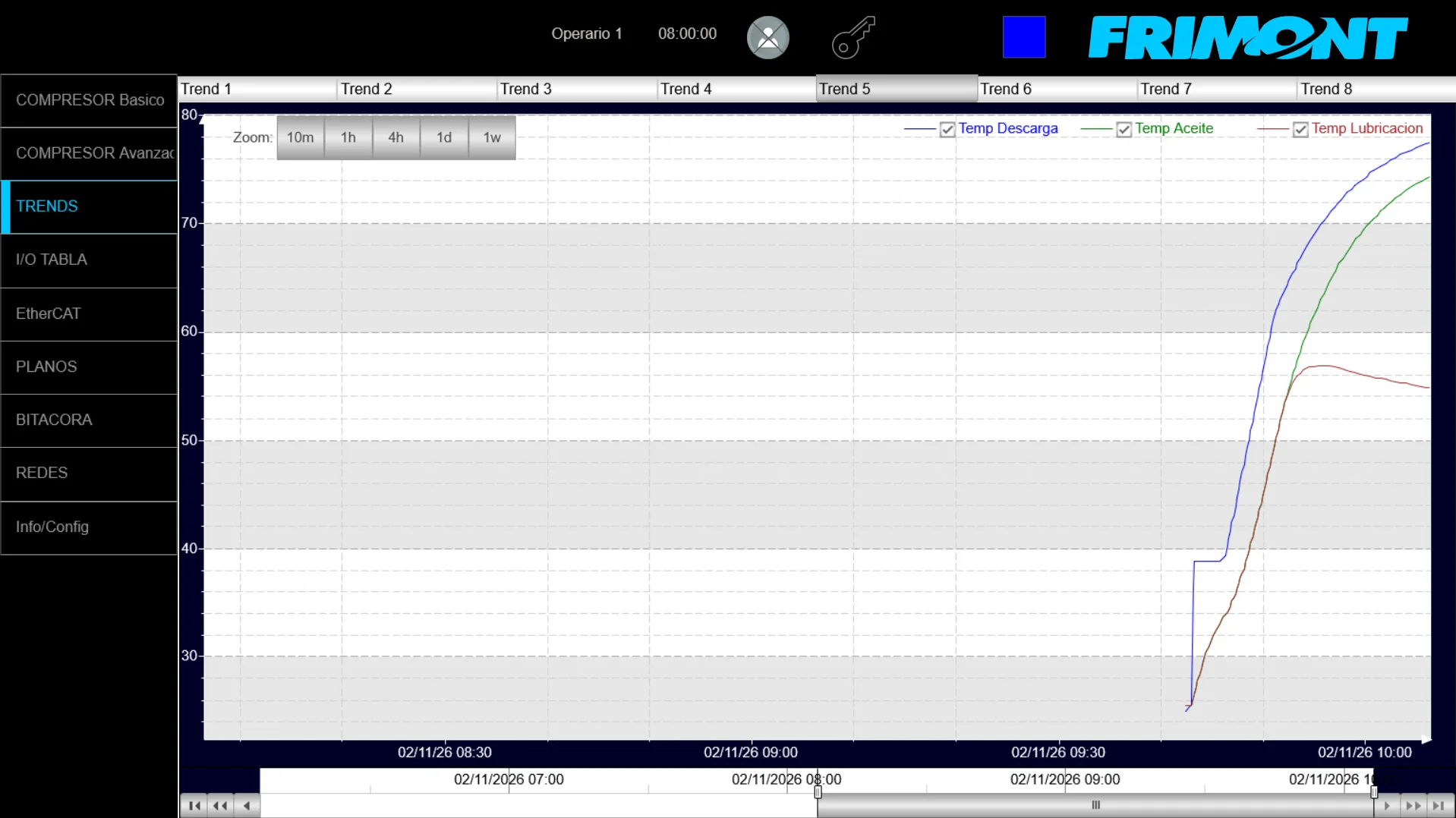
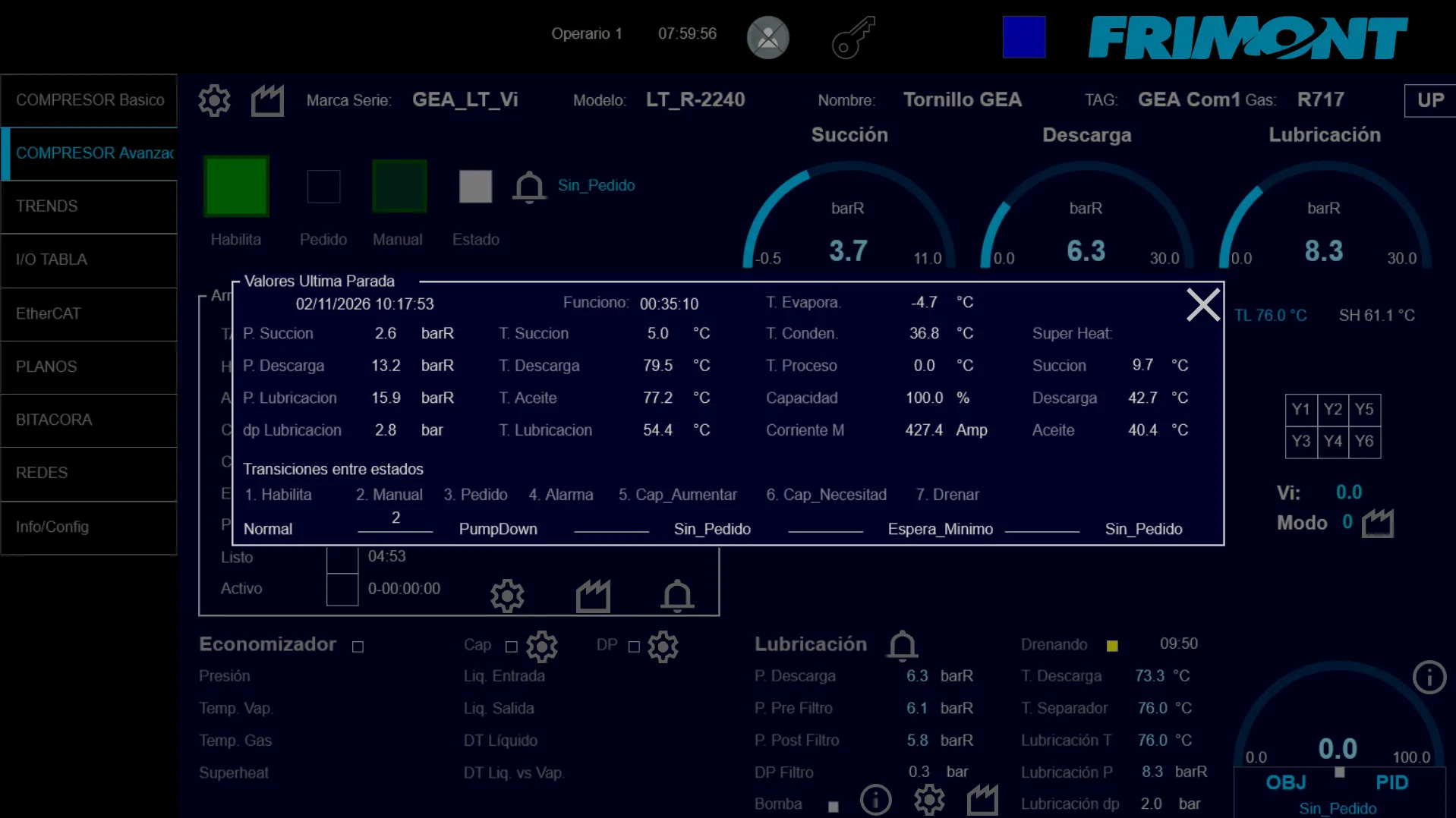
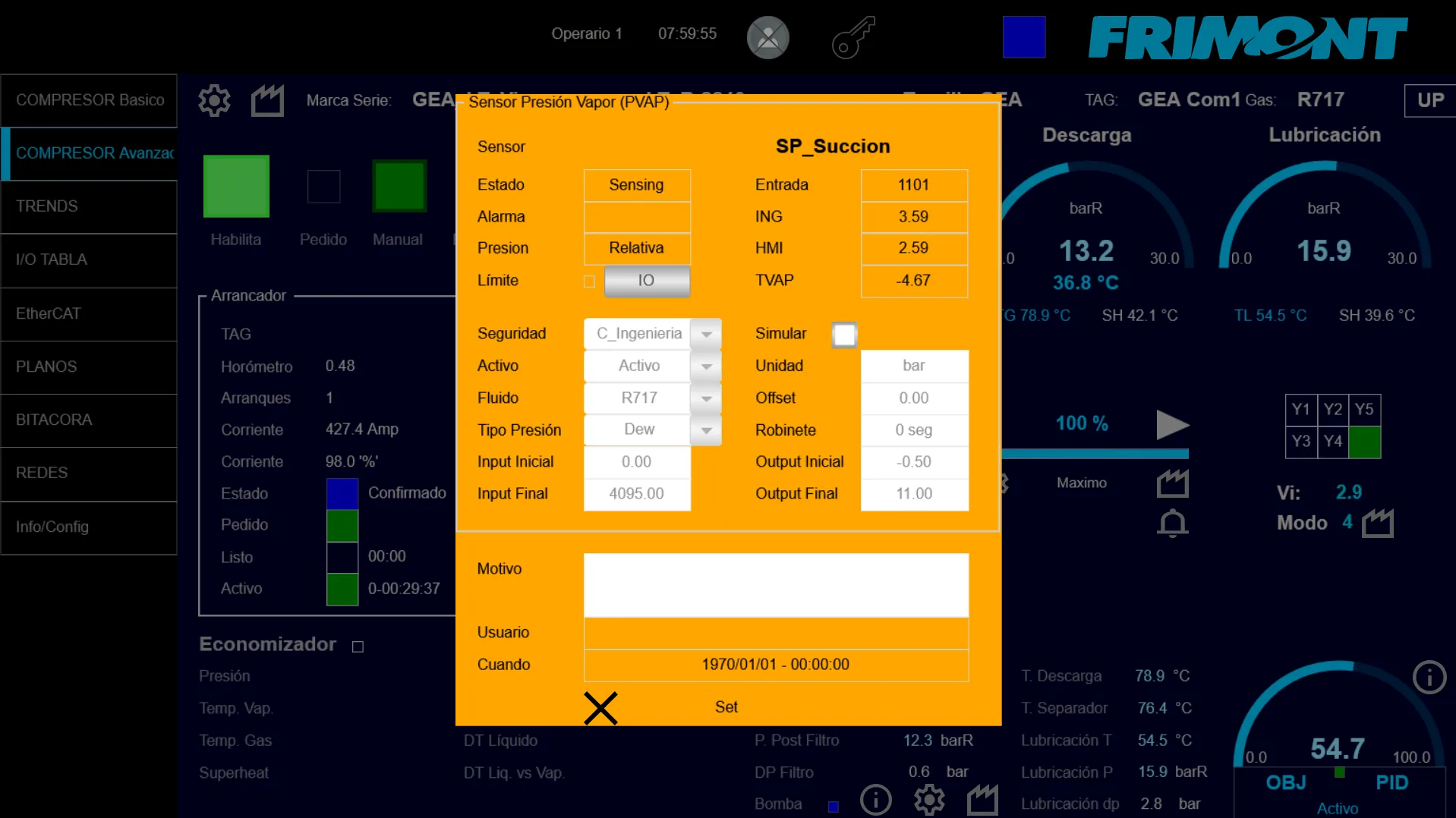
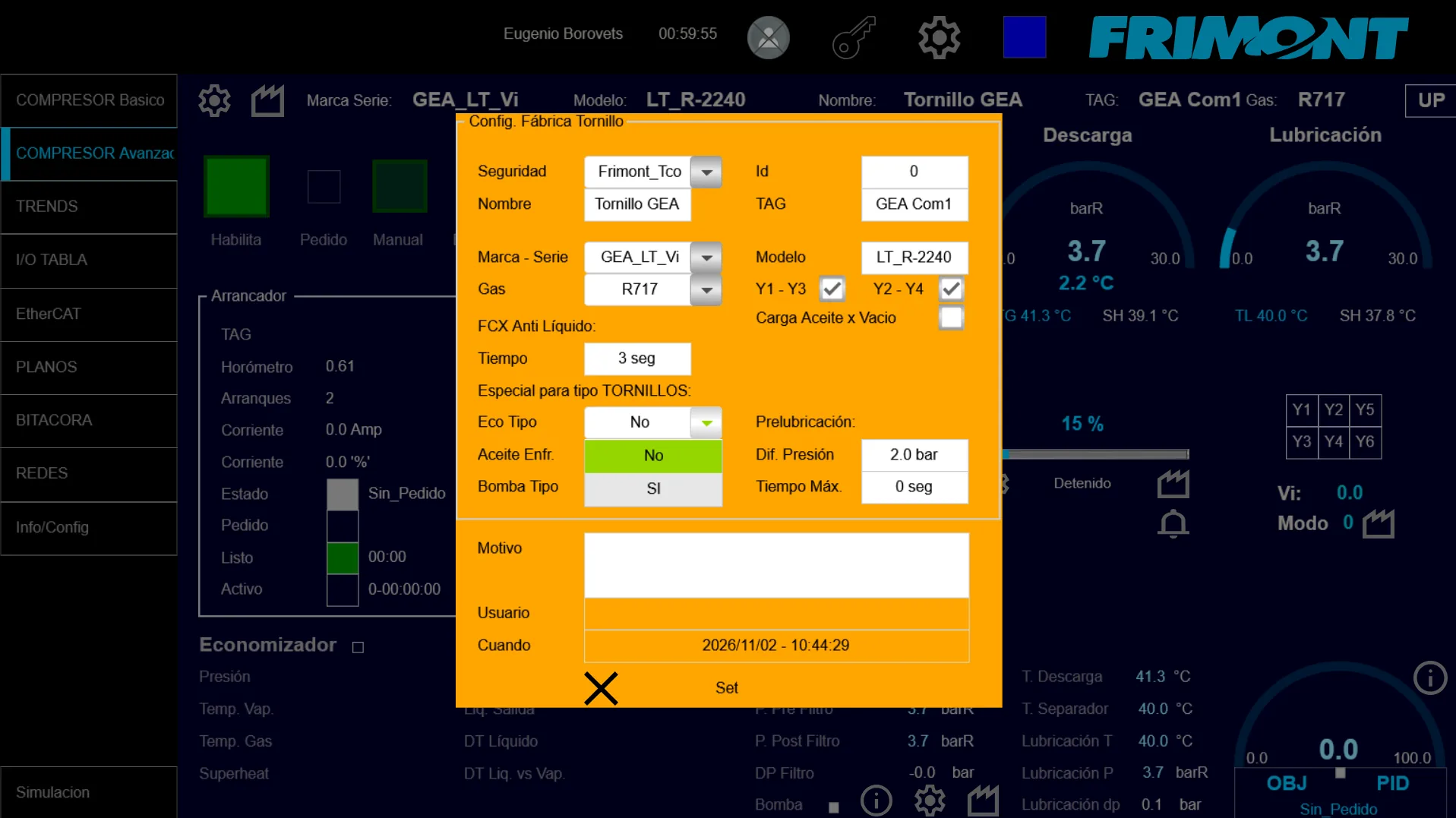
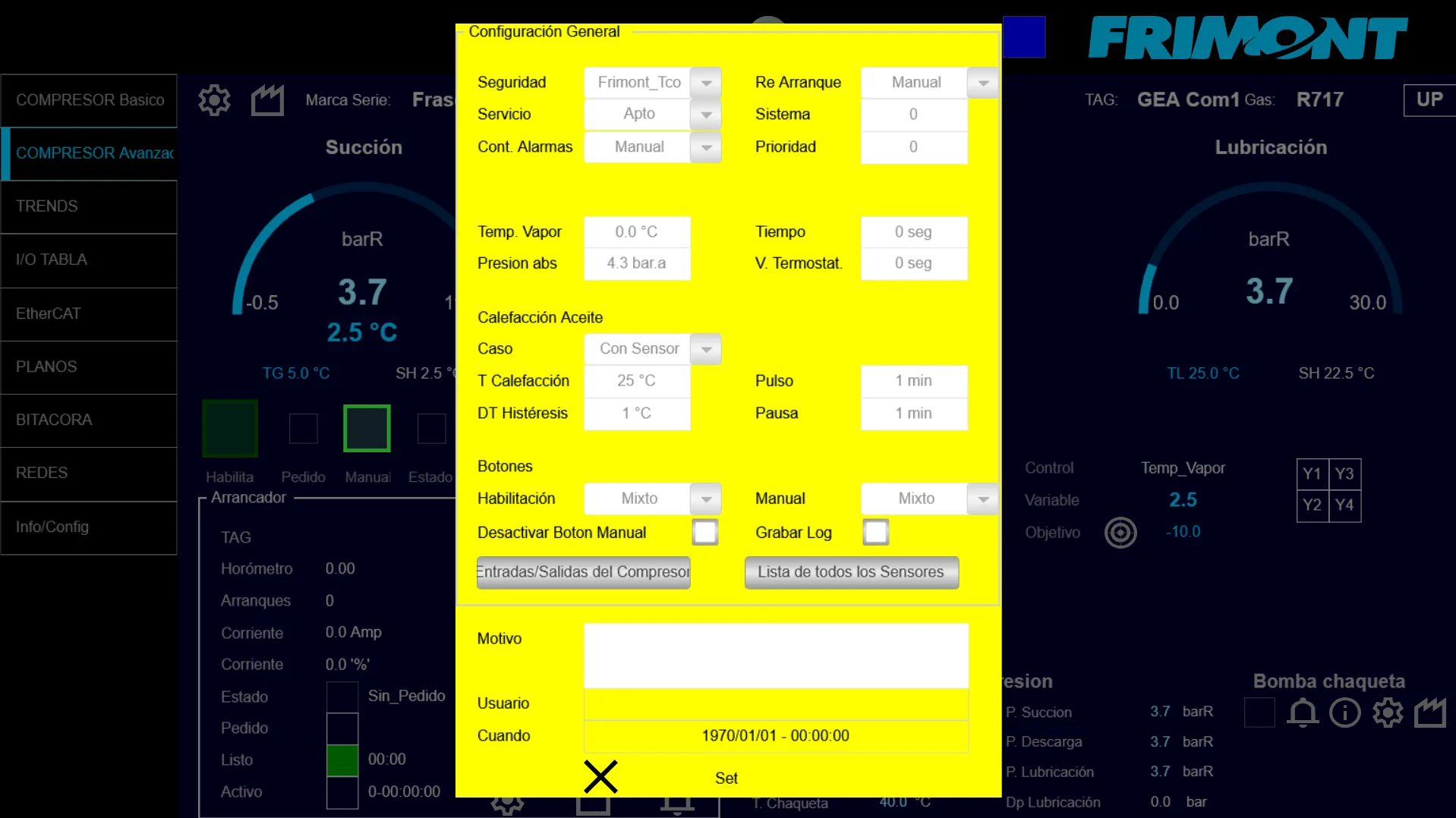
Hover over the index to view each screen. Click to keep it displayed.
Applications
What it solves.
FCX controls the installation with our own object-oriented software: compressors, pumps, heat exchangers, vessels, valves and conveyors each have their own tested, reusable logic. The HMI and SCADA are part of the same system, to operate, supervise and log the process from the browser.
- Process plants in mining, chemicals, food and energy.
- Thermal and chemical processes: evaporation, crystallization, drying and water treatment.
- Machine rooms, compressors and refrigeration plants.
- Supervision, alarms and logging from the integrated HMI and SCADA.
- Secure remote support over VPN.
Configurations
A configuration tailored to your application.
Technical selection defines the equipment and its integration with the process.
Control to IEC 61131-3
Our own software, running on the hardware each project calls for, any brand or model, and extended with new objects and custom programming.
Fieldbuses and networks
EtherCAT, PROFINET, EtherNet/IP and Modbus. Where the bus allows it, we build secure ring architectures with redundancy and network diagnostics, so a single cable break does not interrupt communication.
Integrated HMI and SCADA
Screens, alarms and trends from computers and mobile devices, with users and permissions by level.
Data logging
Process variables, alarms and events are stored in the SCADA database or in SQL, depending on the installation scope.
Why FCX
Automation is part of the solution, not a final patch.
We started as process engineers. When automation arrives at the end, in the hands of people who do not know the process, timelines multiply and the solution struggles to meet what the plant needs. In FCX, control is born with the process: the people who know how the plant runs write the logic, and the control arrives tested together with the equipment.
- More than 20 large machines and projects with FCX in 4 years.
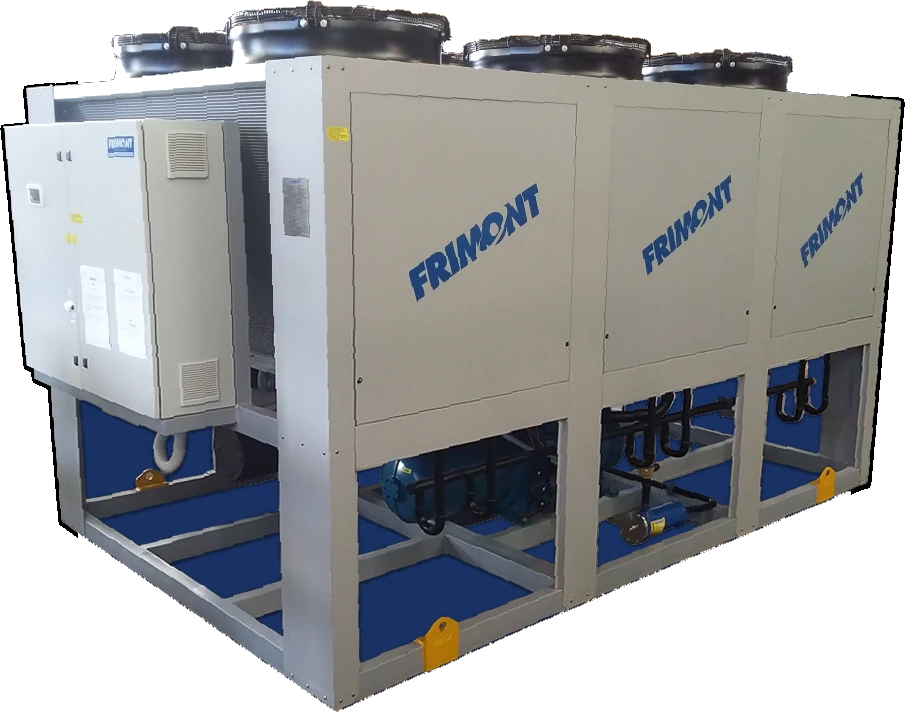
- Screw compressor units that leave the factory with FCX control.
- Complete refrigeration plants, such as Avícola Luján and Australis.
- The same software objects on every machine: what is tested on one is applied to the next.
What we solve
Control problems we see in plants.
Common situations in industrial plants, and how an FCX system deals with them.
Obsolete control
Controllers with no spare parts or support. We move the logic to FCX on current hardware and keep what works.
A program nobody understands
Undocumented code, or code from a supplier that is gone. We restructure it with IEC 61131-3 objects and document it.
Stalled projects
Automation left halfway. We survey the real state and finish it, solving problems on site with your team.
Isolated equipment
Compressors, pumps, heat exchangers and process lines with separate controls. FCX brings them into one system.
A plant without information
No useful history or alarms. FCX logs variables, alarms and events and shows them in the browser.
Every fault, a trip
With secure remote access we diagnose and support your team without waiting for a visit.
How we work
From the process to commissioning.
We work alongside your plant team. We solve problems on site and document as we go: documentation supports the work instead of holding it up.
Process survey
We understand the process, the equipment and how your plant runs before defining the control.
Engineering
Control architecture, input and output list and electrical drawings.
Programming and factory testing
We program with FCX objects and test the control before it reaches the plant.
Commissioning
We fine-tune on site with your team and train the operators.
Support
Secure remote access, controlled updates and standard replacement hardware.
What we deliver
Standard documentation with every machine and every project.
It is not an extra: it is part of every FCX system.
- Electrical drawings.
- Input and output list.
- Control and communications architecture.
- Version-controlled program.
- Operating manual.
- Factory test protocol.
- Training for operating staff.
Robust platform
A system that is not written to does not get corrupted.
FCX security does not end with access control. The platform is built for hardware reliability on the plant floor: power outages, continuous operation and years of service.
Read-only base system
With an overlay layer, whatever is written during operation stays in memory and the system disk is not modified. This prevents disk corruption and unauthorized changes.
Known state at every boot
Every restart, even after a power outage, returns the system to its original, clean configuration.
No swap memory
Memory behaves predictably: no paging to disk, no unexpected delays under load and no storage wear.
Minimal disk writes
Temporary files and operator screen data live in RAM, extending the service life of solid-state drives.
Reserved memory
Memory policies keep a margin for critical functions and prevent any one process from starving the system.
Automatic recovery
If the operator interface stops, it restarts on its own within seconds, with no operator action.
Virtualized control
FCX also runs on virtualized control servers.
FCX can run on virtualized plant servers, in containers or on a hypervisor, with the same control logic and the same security rules.
Several controllers on one server
Each process runs in its own control instance, isolated from the others. Less hardware, less wiring and fewer panels to maintain.
Predictable control cycle
We define the platform and each instance's reserved resources so control responds on time even when it shares the server.
Field devices over industrial Ethernet
Field equipment connects over EtherCAT, PROFINET, EtherNet/IP or Modbus, just as with a physical controller.
Centralized maintenance
Updates, backups and new functions are managed from the server, without working panel by panel.
Each instance, one zone
Each instance is treated as an IEC 62443 zone, with its own access and traffic control. SIL functions stay on certified safety controllers, separate from process control.
Availability by design
We plan server and storage redundancy so control does not depend on a single machine.
Remote support
Secure remote access for diagnostics and support.
FCX supports remote access over VPN so our team can diagnose the plant, support your operation and update the system without travelling. That access is treated as an IEC 62443 conduit: encrypted, authenticated and logged.
Plant diagnostics
We review process variables, alarms and trends remotely to find the cause of a failure and guide your team.
Operations support
We work through adjustments and fine-tuning with your staff, with fewer site visits and less downtime.
System updates
We apply improvements and updates in a controlled, documented way, without touching the panel on site.
VPN-encrypted connection
Access travels through an encrypted VPN tunnel: the control system is not exposed directly to the internet.
Authenticated access
Only authenticated maintenance users get in, and repeated failed attempts are blocked automatically.
Logged access
We agree with the plant who accesses and when, and every access is logged for follow-up.
Standards
Programming, cybersecurity and functional safety.
FCX systems are programmed to IEC 61131-3, configured to IEC 62443 and, when the project calls for it, add safety functions to IEC 61508 and IEC 61511.
IEC 61131-3 programming
Object orientation in CODESYS, the standard's languages and the hardware each project calls for.
IEC 62443 cybersecurity · SL1 and SL2
The 7 foundational requirements applied, zones and conduits, and secure remote access.
IEC 61508 and IEC 61511 functional safety
SIL functions on certified equipment, safety instrumented systems and the full lifecycle.
Selection
How we define the solution for your process.
We start from what you need to achieve and your facility conditions. We guide you through defining requirements and selecting an appropriate configuration. You do not need to have all this data to start the conversation.
What we evaluate during technical definition
- Signals and interfaces
- Existing equipment, protocols, and variables requiring monitoring.
- Operation and access
- Users, network, access permissions, and logging scope.
Documentation
Technical documentation.
Request technical documentation for the configuration required by your process. Tell us about your application and operating conditions to guide the inquiry.
Request technical documentationEngineering and integration
Scope is defined with you.
From equipment selection to integration, installation, and commissioning, we agree on what the project needs and how it connects to your facility. Control systems and after-sales service are integral parts of that conversation.
What we can undertakeWithin the same system
Related equipment.
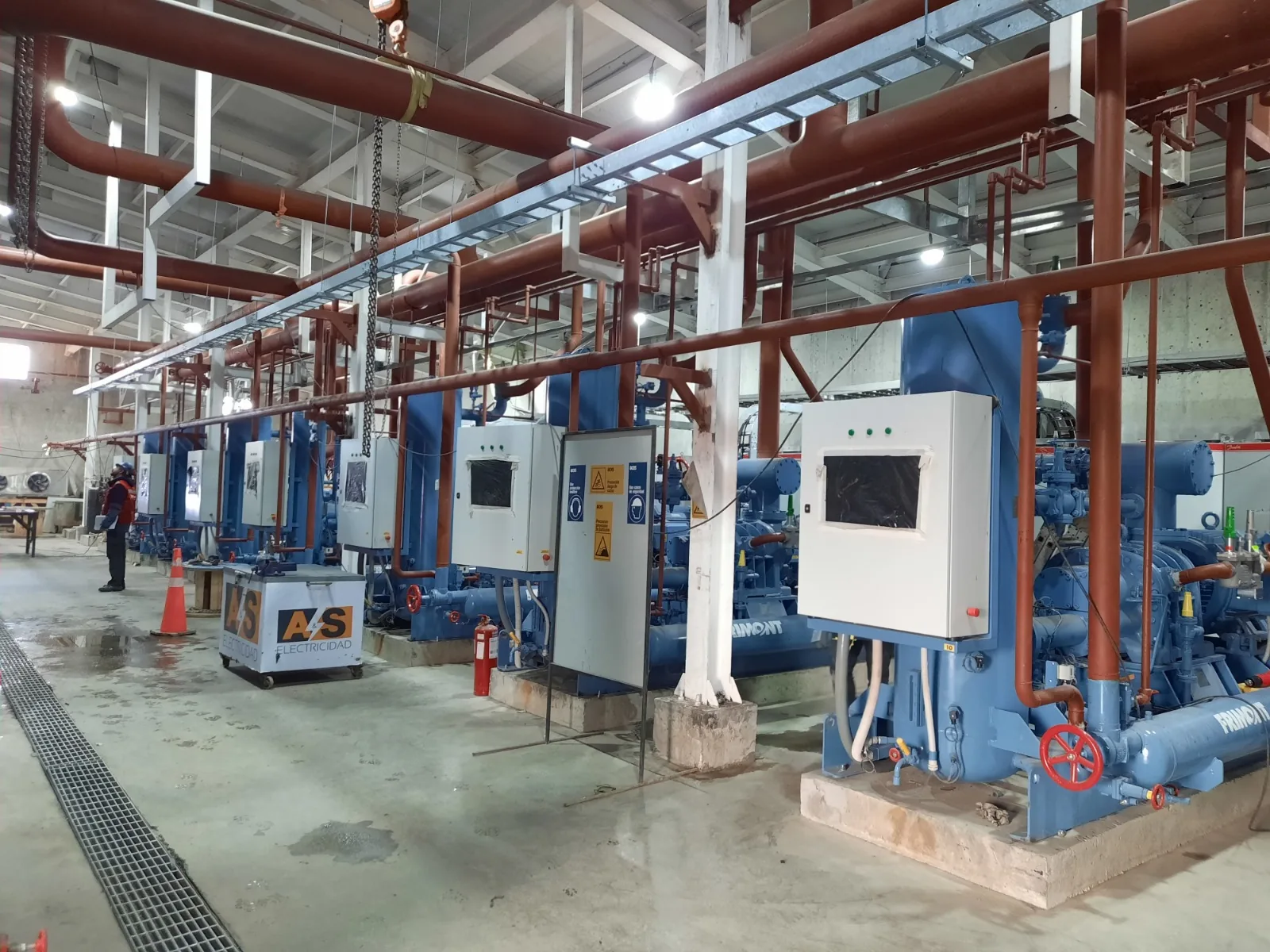
Ammonia refrigeration plants
Refrigeration engineering and integration for industrial cold rooms and processes.
Explore equipment