
Refrigeration systems and product chilling
CTI fixed detectors for CO₂, refrigerants and other gases
FRIMONT distributes CTI (Calibration Technologies, United States), a gas detection manufacturer. We build its detectors into our plants and also supply them as a stand-alone safety project. Detectors for CO₂, synthetic refrigerants, oxygen deficiency, combustible gases and toxic gases, with the same rugged build as the ammonia line.
This page follows CTI's product presentation (ctigas.com), adapted to the FRIMONT site. Ranges and data are catalog figures.
Configurations
A configuration tailored to your application.
Technical selection defines the equipment and its integration with the process.
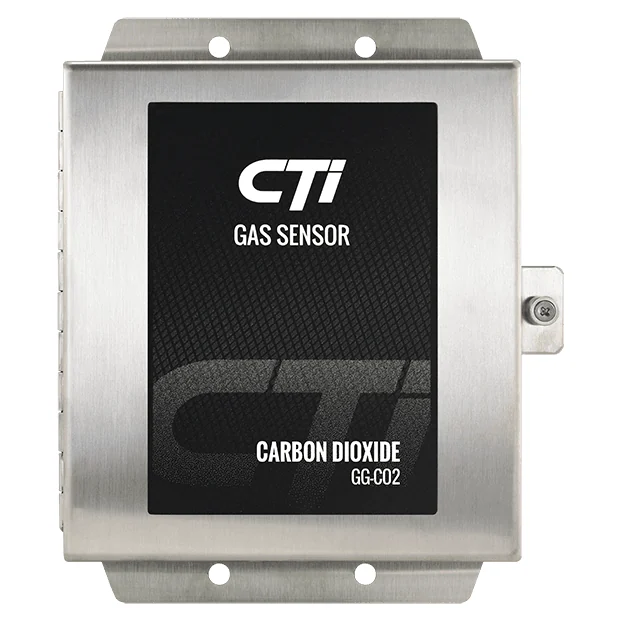
GG-CO2 · Carbon dioxide
CO₂-specific NDIR infrared sensor, with no moving parts or cells to replace. Unaffected by moisture or by the temperature swings of washdowns and defrosts.
Catalog data
- Ranges: 0-2,500 ppm to 0-100%
- 4-20 mA output, 24 VDC
- Operates from −51 to +49 °C, with heater
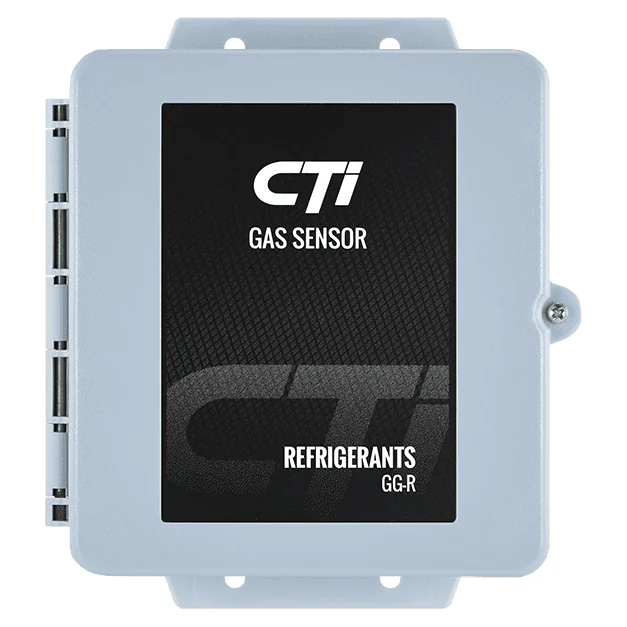
GG-R · Synthetic refrigerants
NDIR infrared sensor for HFC and HFO refrigerants, including R134a, R404A, R407C, R410A, R448A, R449A, R507A, R513A, R32, R1234yf and R1234ze.
Catalog data
- Ranges: 0-500 or 0-1,000 ppm
- 4-20 mA output, 24 VDC
- Operates from −45 to +49 °C, with heater
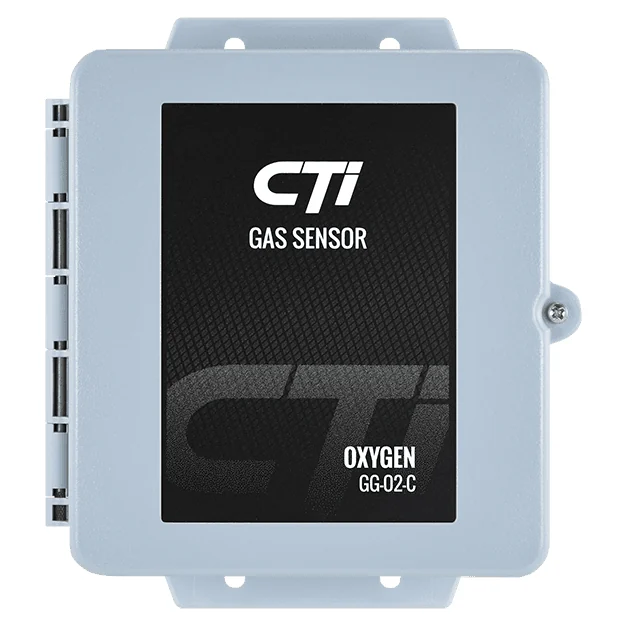
GG-O2 · Oxygen
Monitors oxygen deficiency or enrichment in enclosed rooms, machinery rooms, blast cells and washdown areas. Temperature-compensated electrochemical cell.
Catalog data
- Ranges: 0-25% or 15-25% O₂
- 4-20 mA output, 24 VDC
- Typical cell life: 3 years
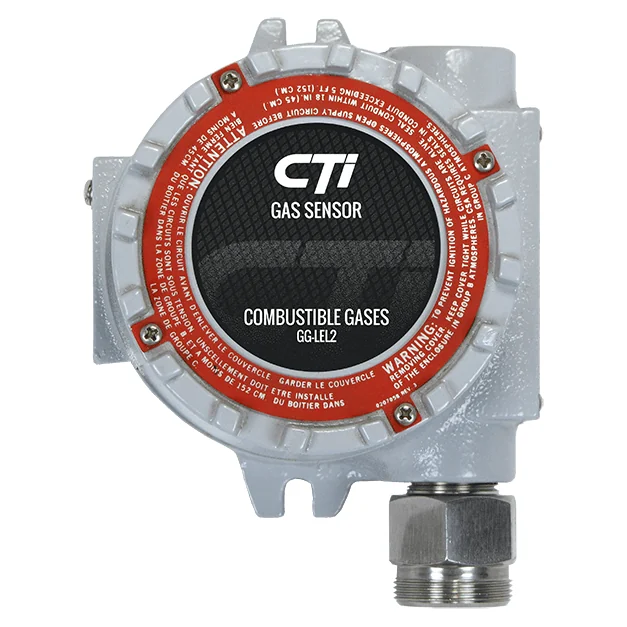
GG-LEL2 · Combustible gases
Explosion-proof catalytic detector for methane, propane, hydrogen, ethane, ethylene, alcohols and solvents, and also ammonia in its flammable range.
Catalog data
- Range: 0-100% LEL
- Class I, Div. 1, Groups B, C and D (NEC/CEC)
- Typical sensor life: 5 to 8 years
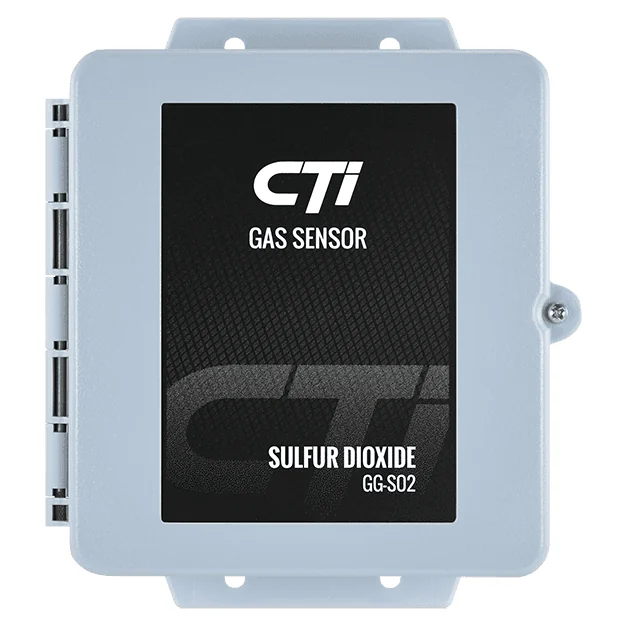
Toxic gases
The same GG series is available for carbon monoxide (GG-CO), chlorine (GG-CL2), sulfur dioxide (GG-SO2), ozone (GG-O3) and hydrogen (GG-H2), with 4-20 mA output.
Technical data
Reference values.
CTI detectors by gas
| Gas | Model | Sensor | Range |
|---|---|---|---|
| CO₂ | GG-CO2 | NDIR infrared | 0-2,500 ppm to 0-100% |
| HFC and HFO refrigerants | GG-R | NDIR infrared | 0-500 or 0-1,000 ppm |
| Oxygen | GG-O2 | Electrochemical | 0-25% or 15-25% |
| Combustibles | GG-LEL2 | Catalytic bead | 0-100% LEL |
Source: CTI (ctigas.com). All with 4-20 mA output and a 2-year warranty on sensor and transmitter.
Applications
What it solves.
Besides ammonia, CTI builds detectors for the other gases in an industrial plant: CO₂ in refrigeration systems, wineries and breweries; HFC and HFO synthetic refrigerants; oxygen in rooms where an inert gas can displace it; combustible gases in classified areas; and toxic gases such as carbon monoxide, chlorine, sulfur dioxide or ozone. At FRIMONT we select the sensor and range for each room and integrate them into the same alarm system.
- Installations with CO₂ as refrigerant.
- Wineries, breweries and fermentation.
- Machinery rooms with synthetic refrigerants.
- Rooms at risk of oxygen deficiency.
- Areas with combustible or toxic gases.
Selection
How we define the solution for your process.
We start from what you need to achieve and your facility conditions. We guide you through defining requirements and selecting an appropriate configuration. You do not need to have all this data to start the conversation.
What we evaluate during technical definition
- Gas and density
- CO₂ and most synthetic refrigerants are heavier than air and collect low; hydrogen and methane rise. The mounting height follows the gas to be detected.
- Room and classification
- Classified areas use the explosion-proof models. Cold rooms and washdown areas use the NEMA 3RX enclosures with heater.
Documentation
Technical documentation.
Request technical documentation for the configuration required by your process. Tell us about your application and operating conditions to guide the inquiry.
Request technical documentationEngineering and integration
Scope is defined with you.
From equipment selection to integration, installation, and commissioning, we agree on what the project needs and how it connects to your facility. Control systems and after-sales service are integral parts of that conversation.
What we can undertakeWithin the same system
Related equipment.
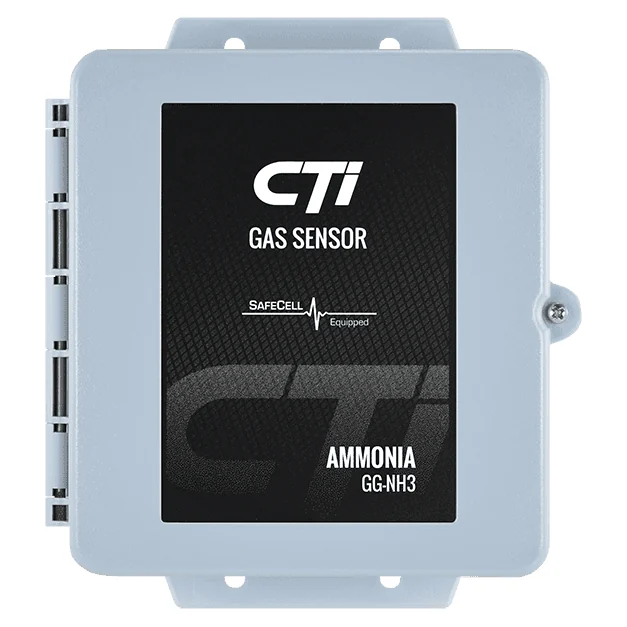
CTI fixed ammonia detectors
Continuous ammonia detection in machinery rooms, cold rooms, tunnels and relief lines, with sensors built for cold, condensation and washdown.
Explore equipment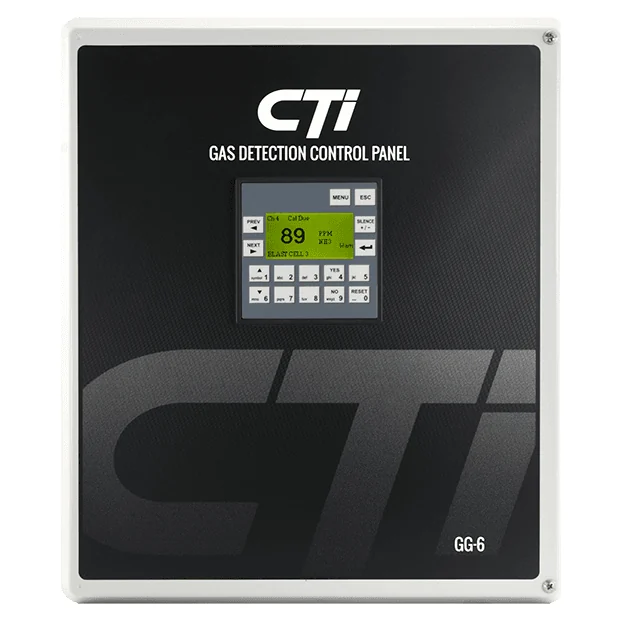
CTI gas detection controllers
Panels that receive the detector signals, show concentrations, log events and drive alarms, ventilation and shutdowns.
Explore equipment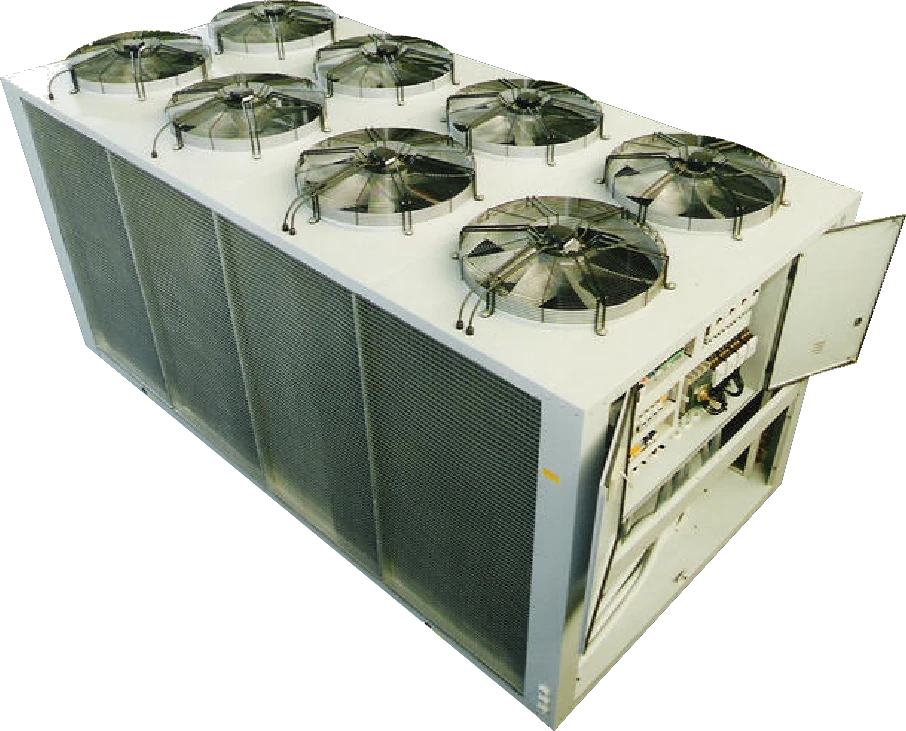
Eco-friendly chillers
Chillers with low-GWP refrigerants, designed to current environmental regulations or the refrigerant your company specifies.
Explore equipment