
Refrigeration systems and product chilling
Refrigeration systems for LEED projects
Industrial refrigeration for LEED-certified buildings and distribution centers: natural refrigerants, minimum charge and cooling through aqueous fluids.
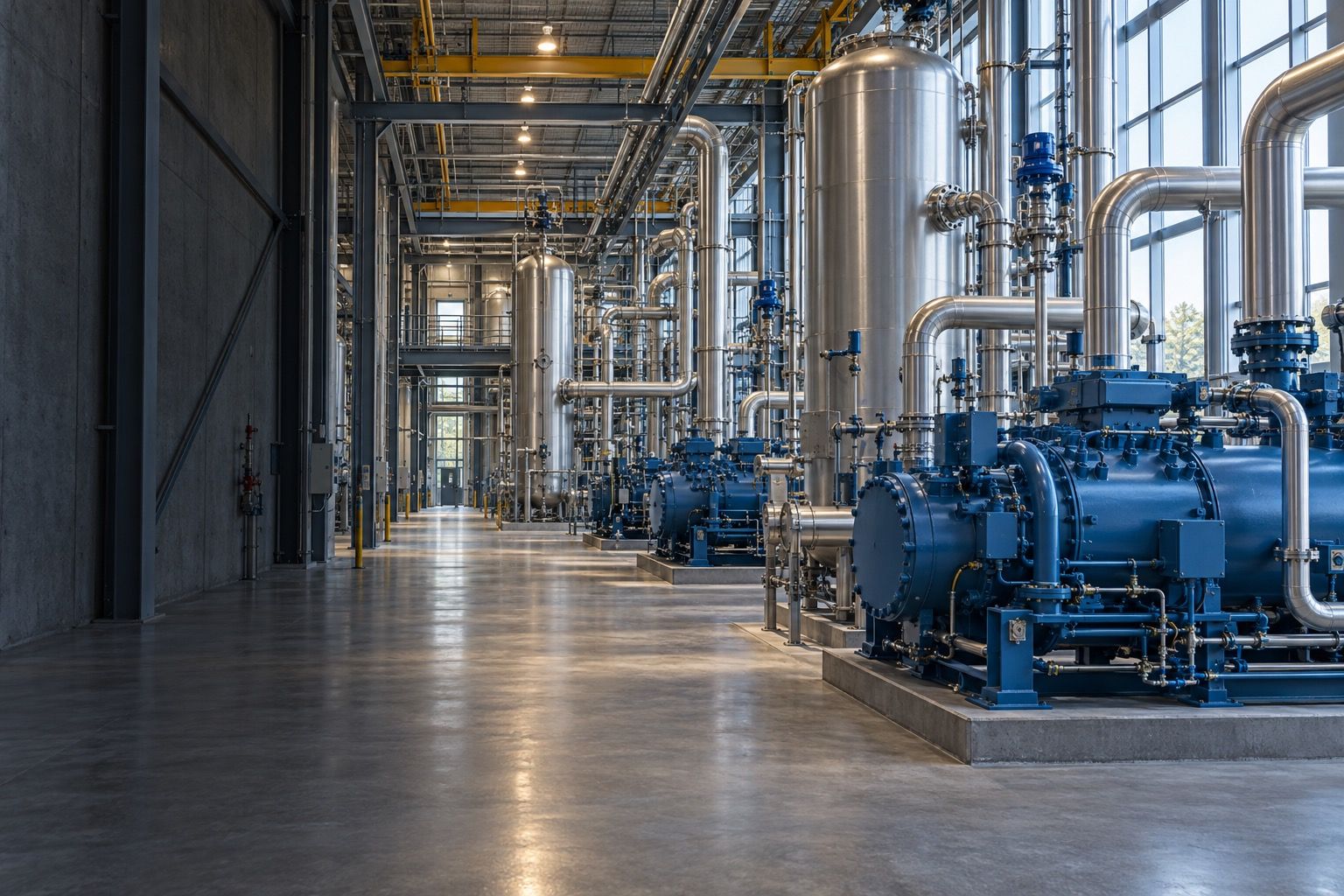
A fresh and frozen food distribution center in Santiago, Chile, LEED certified, chills and keeps frozen goods with aqueous solutions and holds only 300 liters of ammonia.
Applications
What it solves.
LEED, the U.S. Green Building Council's certification system, also assesses refrigeration. Version 5 requires an inventory of all refrigerants, no HCFCs in new equipment, a review of alternatives for refrigerants with GWP above 700 and leak control; an additional credit earns points for low GWP and for limiting leakage. In industrial refrigeration we address this from the design stage: natural refrigerants such as ammonia and CO₂, the smallest possible charge, a secondary fluid that carries cooling to cold rooms and halls, heat recovery and energy metering.
- Distribution centers and cold stores for chilled and frozen goods pursuing LEED certification.
- Food plants and meat processors with emission-reduction goals or customers that require LEED.
- Large buildings and processing rooms that combine air conditioning and refrigeration in one certified project.
Configurations
A configuration tailored to your application.
Technical selection defines the equipment and its integration with the process.
Natural refrigerants: ammonia and CO₂
Ammonia (GWP 0) and CO₂ (GWP 1) sit far below the benchmark LEED v5 sets for industrial refrigeration and cold storage, and they do not depend on the HFC phase-down schedule.
Minimum charge, confined to the machine room
With compact low-charge chillers, the refrigerant drops to a fraction of a conventional system and stays in the machine room: less inventory, lower risk if there is a leak and simpler control. At a fresh and frozen food distribution center in Santiago, Chile, the whole plant runs on 300 liters of ammonia.
Cooling through a secondary fluid
Water, glycol or an aqueous solution reaches the cold rooms and halls, cooling them and also defrosting them. Refrigerant piping is short, with few field joints that are easy to check.
Energy: efficiency, recovered heat and metering
Variable-speed compressors, floating condensing and recovery of condenser heat for hot water, space heating or defrost. The refrigeration plant is metered separately, as LEED requires, and we deliver the documentation for commissioning.
Refrigerant and leak management
Inventory of each unit with refrigerant type, GWP and charge; pressure, vacuum and tightness tests before charging; automatic detection in the machine room and a refrigerant management plan for operation.
Technical data
Reference values.
How refrigeration meets LEED v5
Indicative summary of the LEED v5 requirements related to the refrigeration plant.
| LEED v5 requirement | What it asks for | How we address it |
|---|---|---|
| Fundamental Refrigerant Management (prerequisite) | Inventory of all refrigerant-containing equipment, no HCFCs in new equipment, review of alternatives for refrigerants with GWP above 700 and leak control before handover. | Inventory of type, GWP and charge; ammonia or CO₂; pressure, vacuum and tightness tests before charging. |
| Enhanced Refrigerant Management (credit) | Points for a low average GWP against a benchmark per equipment type, or for limiting leakage with detection, brazed or press fittings and a management plan. | Refrigerants with GWP 0 to 1, minimum charge, automatic detection and a refrigerant management plan. |
| Energy (prerequisites and credits) | Energy efficiency, energy metering, electrification and commissioning. | Variable-speed compressors, heat recovery, refrigeration plant metering and start-up documentation. |
Exact names, points and requirements vary by rating system (BD+C, O+M) and are confirmed by the project's LEED consultant.
Refrigerants against the LEED v5 benchmark
LEED v5 uses a benchmark GWP of 300 for industrial refrigeration and cold storage; the credit rewards averages of 80% and 50% of that value.
| Refrigerant | GWP (approx.) | Against the 300 benchmark |
|---|---|---|
| Ammonia · R-717 | 0 | Far below |
| CO₂ · R-744 | 1 | Far below |
| Propane · R-290 | 3 | Far below |
| R-134a | 1,430 | Above |
| R-404A | 3,922 | Far above |
100-year GWP: U.S. EPA Technology Transitions GWP Reference Table, rounded; ammonia, 0 (the EPA assigns it 1).
Selection
How we define the solution for your process.
We start from what you need to achieve and your facility conditions. We guide you through defining requirements and selecting an appropriate configuration. You do not need to have all this data to start the conversation.
What we evaluate during technical definition
- Certification scope
- LEED rating system and version, target level, credits the project wants to earn and its LEED consultant.
- Rooms and temperatures
- Cold rooms, halls and processes, with their temperature, size and product flow.
- Energy and recovered heat
- Hot water or heating demands in the building that can use heat from the refrigeration plant.
Documentation
Technical documentation.
Request technical documentation for the configuration required by your process. Tell us about your application and operating conditions to guide the inquiry.
Request technical documentationEngineering and integration
Scope is defined with you.
From equipment selection to integration, installation, and commissioning, we agree on what the project needs and how it connects to your facility. Control systems and after-sales service are integral parts of that conversation.
What we can undertakeWithin the same system
Related equipment.
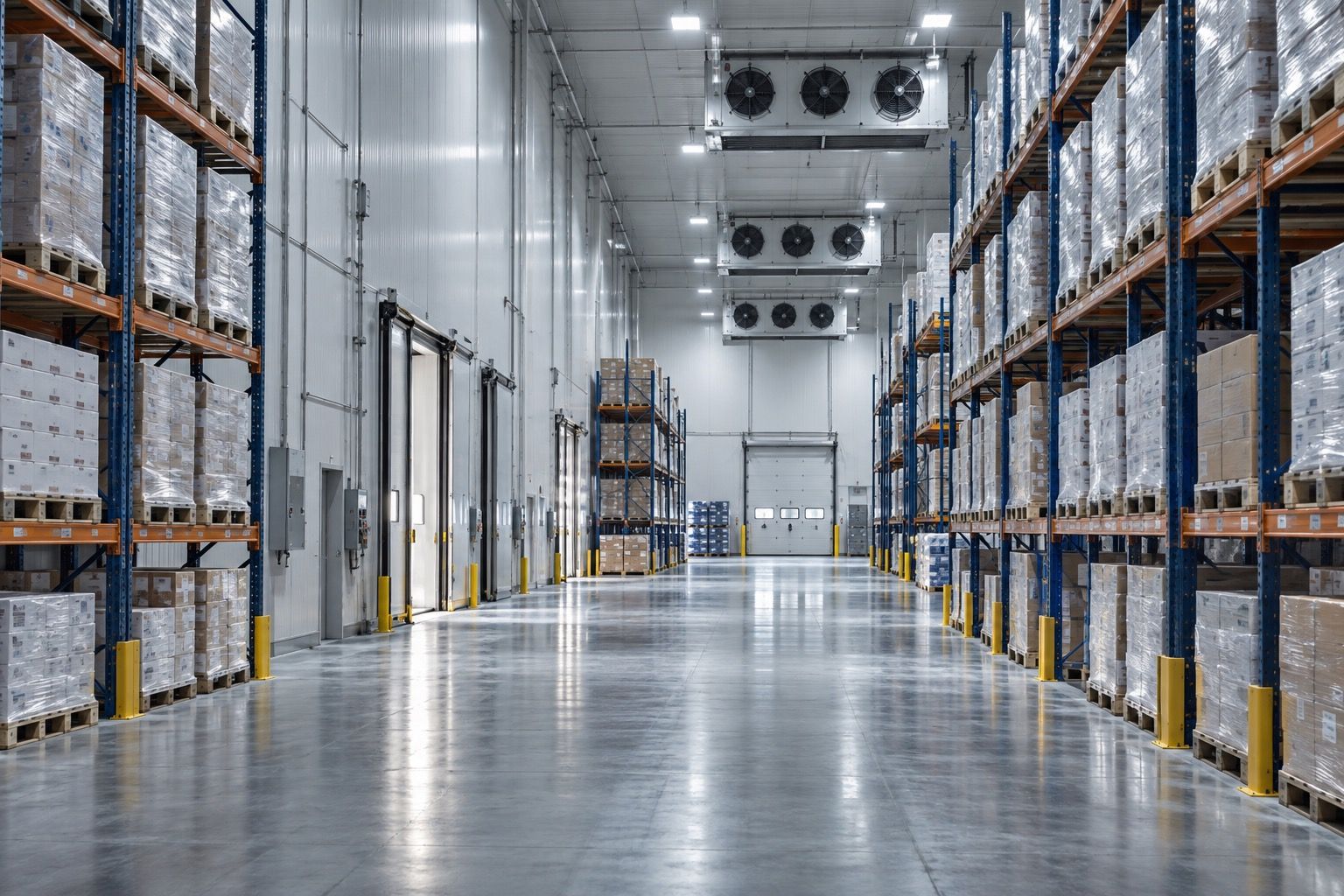
Cold rooms with secondary fluid · Dry, indirect systems
Cooling for cold rooms, meat plants and large rooms with no refrigerant inside them: they are cooled and defrosted with water, glycol or aqueous solutions.
Explore equipment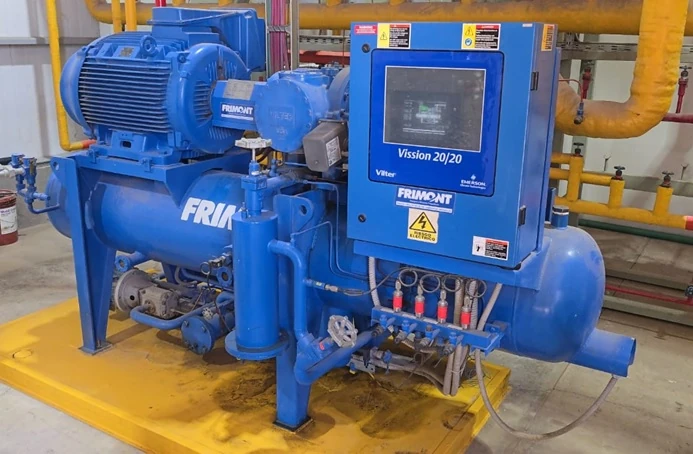
Low-charge chillers · Dry chillers
Chillers with the smallest possible refrigerant charge: cooling reaches the plant through water, glycol, aqueous solutions or pumped CO₂, from +20 °C down to −50 °C.
Explore equipment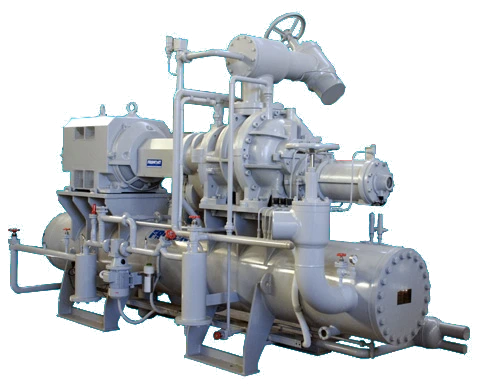
Green chillers · Natural refrigerants
Chillers with ammonia, CO₂ or hydrocarbons: natural refrigerants with no impact on the ozone layer and zero or near-zero GWP.
Explore equipment